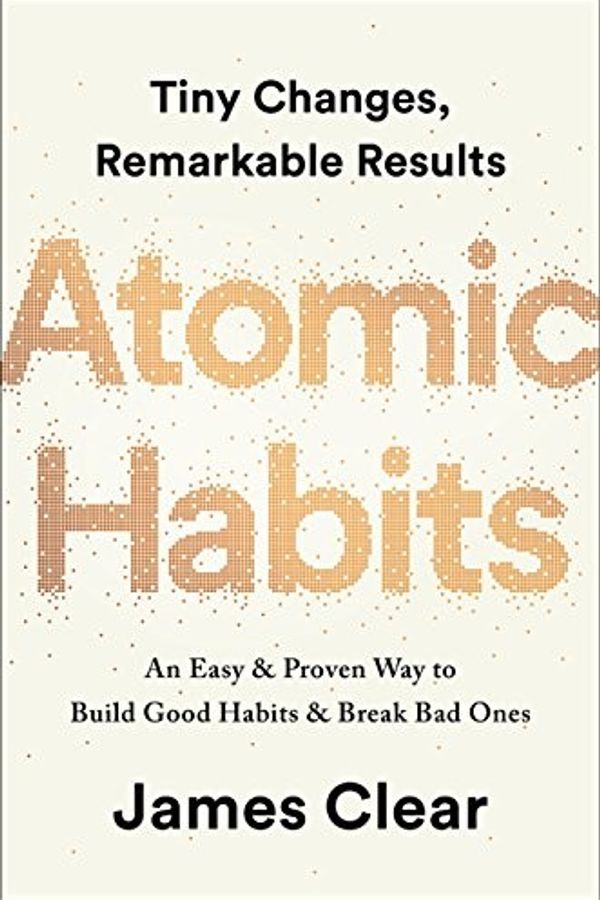
Atomic Habits by James Clear book cover Featured Selection

Books Like Atomic Habits

James Clear's Atomic Habits did something rare in the self-improvement space: it made behavior change feel achievable. Instead of demanding radical life overhauls, Clear argued that tiny, consistent adjustments compound into dramatic results. The book's framework of cue, craving, response, and reward gave millions of readers a practical system they could start using the same day they finished reading. If you picked it up hoping to fix one small habit and ended up rethinking your entire approach to goals, you are not alone.

James Clear's Atomic Habits did something rare in the self-improvement space: it made behavior change feel achievable. Instead of demanding radical life overhauls, Clear argued that tiny, consistent adjustments compound into dramatic results. The book's framework of cue, craving, response, and reward gave millions of readers a practical system they could start using the same day they finished reading. If you picked it up hoping to fix one small habit and ended up rethinking your entire approach to goals, you are not alone.

The reason so many people search for books like Atomic Habits is that Clear hit a sweet spot between science and storytelling. He backs every claim with research but delivers it through real-world examples that stick. The writing is clean, the chapters are short, and the ideas build on each other without wasting your time. That combination of rigor and accessibility is hard to replicate.

The books similar to Atomic Habits on this list approach personal change from different angles. Some dig deeper into the neuroscience of habits. Others zoom out to question which habits are worth building in the first place. A few challenge the productivity mindset entirely. I have tried to balance the obvious picks with lesser-known titles that deserve wider attention. All of them share Clear's commitment to evidence-based advice delivered in plain language.

Books Similar To Atomic Habits

The Power of Habit

The Power of Habit

Why it's similar

Charles Duhigg's The Power of Habit is the book that paved the road Atomic Habits later drove down. Duhigg introduced the habit loop concept of cue, routine, and reward that Clear expanded and refined. Where Clear focuses on individual behavior change, Duhigg goes wider, examining how habits shape organizations, social movements, and entire economies. The Starbucks chapter alone changed how I think about corporate training. If you read Atomic Habits for the science behind why habits work, Duhigg gives you more of that foundation.

He is a Pulitzer Prize-winning journalist, and his storytelling instincts show. Each chapter reads like a feature article with a clear thesis and satisfying payoff. The two books complement each other perfectly: read Duhigg to understand why habits are so powerful, then use Clear's system to actually build them. Together they form the complete picture of behavioral change.

Deep Work by Cal Newport book cover

Deep Work

Why it's similar

Cal Newport's Deep Work tackles a problem that Atomic Habits only touches on: what to do with the time you free up by optimizing your routines. Newport argues that the ability to concentrate without distraction on hard tasks is becoming increasingly rare and increasingly valuable. He provides specific rules for cultivating that focus, from scheduling every minute of your day to quitting social media. Both books share an engineer's approach to self-improvement. Clear builds systems for habits. Newport builds systems for attention.

The writing styles are similar too: clean, direct, backed by research but never drowning in it. Where they differ is scope. Clear helps you build the tracks. Newport helps you decide which train to put on them. Readers who finished Atomic Habits wanting to apply their new discipline to meaningful work will find Deep Work is the logical next step.

Tiny Habits by BJ Fogg book cover

Tiny Habits

Why it's similar

BJ Fogg is the Stanford behavior scientist whose research influenced James Clear, and Tiny Habits is his distillation of twenty years of academic work into a practical method. Fogg's central argument is radical: start so small that failure is impossible. Want to floss? Floss one tooth. Want to do pushups? Do two after you use the bathroom.

The "anchor-behavior-celebration" recipe is even more granular than Clear's four laws. What makes this a great companion to Atomic Habits is the emphasis on positive emotion as the engine of change. Fogg argues that feeling good about a new behavior, not willpower or repetition, is what makes it stick. Clear touches on this with his identity-based habits concept, but Fogg goes much deeper into the emotional mechanics. If Atomic Habits gave you the blueprint, Tiny Habits gives you the specific construction techniques. I recommend reading them back to back.

Essentialism by Greg McKeown book cover

Essentialism

Why it's similar

Essentialism asks a question that Atomic Habits deliberately sidesteps: are you building the right habits, or just getting efficient at things that do not matter? Greg McKeown argues that most of us say yes to too many commitments and end up spread thin. His solution is a ruthless editing process for your life, focusing only on what produces the highest contribution. The two books work on different levels of the same problem. Clear gives you a system for execution.

McKeown gives you a filter for selection. The writing shares Clear's preference for short chapters, practical frameworks, and real-world case studies. McKeown draws from business strategy and design thinking rather than behavioral psychology, which gives the book a different texture. Readers who built great habits with Clear's method but still feel busy and unfocused need McKeown's perspective. It is the strategic layer that Atomic Habits intentionally leaves to you.

Drive by Daniel Pink book cover

Drive

Why it's similar

Daniel Pink's Drive dismantles the assumption that rewards and punishments are the best way to motivate people. Drawing on decades of behavioral science research, Pink identifies three elements that actually sustain motivation: autonomy, mastery, and purpose. He shows why carrot-and-stick incentives often backfire and what to use instead. Atomic Habits and Drive approach behavior from opposite ends.

Clear focuses on the mechanics of how to change. Pink focuses on the why, the deep motivational forces that determine whether you will stick with a behavior long-term. The writing is punchy and idea-driven in the same way Clear's is, with each chapter built around a clear concept supported by research and examples. If you have ever set up a habit system that worked for two weeks and then collapsed, Pink's framework will help you understand what went wrong at the motivation level.

How to Change

How to Change

Why it's similar

Katy Milkman is a behavioral scientist at Wharton, and How to Change brings academic rigor that even Atomic Habits cannot match. Milkman identifies specific barriers to change, including impulsivity, procrastination, laziness, and forgetting, then prescribes evidence-based strategies for each one. She treats behavior change like a doctor treats disease: diagnose first, then prescribe. This is the book for readers who liked Atomic Habits but wanted more science and less self-help packaging. Milkman writes about her own research studies, including a massive experiment with Google employees and a gym chain.

The tone is warm and accessible despite the academic foundations. Where Clear gives you a universal system, Milkman gives you a toolkit customized to your specific obstacle. Think of it as the advanced course after Atomic Habits 101. A hidden gem that does not get nearly the attention it deserves.

Stolen Focus by Johann Hari book cover

Stolen Focus

Why it's similar

Johann Hari's Stolen Focus takes a contrarian position to the entire productivity genre. Instead of asking how to build better habits, Hari asks why our ability to pay attention has collapsed in the first place. He identifies twelve causes, from smartphone design to pollution to declining sleep quality, and argues that individual solutions will not fix systemic problems. This is the book that complicates Atomic Habits in a productive way. Clear assumes you can control your environment to build good habits.

Hari shows how powerful forces are actively engineering your environment against you. The investigative journalism style is different from Clear's structured frameworks, reading more like a Michael Pollan book than a self-help manual. Readers who suspect that something bigger is working against their habit-building efforts will find Hari's reporting validates that instinct. It pairs well with Atomic Habits as the yin to its yang.

J

James Clear

Explore More Books