Eleanor Oliphant is Completely Fine by Gail Honeyman book cover Featured Selection

7 Books Like Eleanor Oliphant is Completely Fine

Gail Honeyman created Eleanor Oliphant as a character who would make you laugh, then make you realize why you should not have been laughing. Eleanor eats the same meal deal for lunch every day. She drinks two bottles of vodka every weekend. She talks to her mother on the phone every Wednesday. She has not had a real social interaction in years. Her voice is formal, precise, and accidentally hilarious because she says out loud the things the rest of us think but filter. Then Honeyman slowly peels back the reasons for Eleanor's isolation, and the comedy turns into something that will crack your chest open. If you finished this book wanting more books like Eleanor Oliphant is Completely Fine, you are looking for novels with an eccentric, isolated protagonist whose humor masks genuine pain.

Gail Honeyman created Eleanor Oliphant as a character who would make you laugh, then make you realize why you should not have been laughing. Eleanor eats the same meal deal for lunch every day. She drinks two bottles of vodka every weekend. She talks to her mother on the phone every Wednesday. She has not had a real social interaction in years. Her voice is formal, precise, and accidentally hilarious because she says out loud the things the rest of us think but filter. Then Honeyman slowly peels back the reasons for Eleanor's isolation, and the comedy turns into something that will crack your chest open. If you finished this book wanting more books like Eleanor Oliphant is Completely Fine, you are looking for novels with an eccentric, isolated protagonist whose humor masks genuine pain.

Books similar to Eleanor Oliphant is Completely Fine need a specific kind of narrator: someone who sees the world from an unusual angle, who has been damaged by something they cannot or will not name, and who is saved not by romantic love but by ordinary human kindness. The seven picks below all feature characters who have built walls around themselves and who find those walls dismantled by unexpected connection. Some are funny. Some are devastating. Most are both at the same time, which is exactly the balance Honeyman struck.

Books Similar To Eleanor Oliphant is Completely Fine

A Man Called Ove by Fredrik Backman book cover

A Man Called Ove

Why it's similar

Fredrik Backman's A Man Called Ove is the book most often recommended alongside Eleanor Oliphant, and the pairing is earned. Ove is a fifty-nine-year-old widower who has given up on life. He patrols his housing association enforcing rules nobody asked him to enforce. He has a routine for everything. He has friends for nothing. Then a loud, pregnant woman and her family move in next door, and a stray cat refuses to leave him alone, and slowly, against his will, Ove becomes part of a community again. The structural parallel to Eleanor is exact. Both protagonists have built rigid routines to contain their grief. Both are accidentally funny because their worldview is so particular.

Both are saved by people who refuse to respect their boundaries. Backman writes with more sentimentality than Honeyman. He leans into the warmth more quickly and more openly. Ove's backstory unfolds through flashbacks that explain his grumpiness the way Eleanor's phone calls explain her isolation. The emotional payoff operates on the same frequency. You start the book tolerating the protagonist. You end it wrecked by how much you care about them. If Eleanor made you cry, Ove will do the same thing from a different angle.

Elements in common with Eleanor Oliphant is Completely Fine

  • Isolated curmudgeon protagonist
  • Rigid routines masking grief
  • Community breaking through walls
  • Comedy turning to emotional devastation
The Rosie Project by Graeme Simsion book cover

The Rosie Project

Why it's similar

Graeme Simsion's The Rosie Project shares Eleanor Oliphant's central character concept: a person whose brain works differently from everyone else's, narrating their own life with unintentional comedy. Don Tillman is a genetics professor who designs a questionnaire to find the perfect wife. His criteria are precise and absurd. Then Rosie Jarman walks into his life. She fails every question on his survey and turns his controlled existence sideways. Don is not written as having a specific diagnosis, but he processes the world through logic and systems the same way Eleanor processes it through her own distorted lens. Both narrators make readers laugh by reporting social situations with clinical accuracy.

Both are blind to things about themselves that the reader sees immediately. Simsion leans into romantic comedy more than Honeyman does. The Rosie Project is lighter, funnier, and less interested in trauma. Don's quirks come from how his brain is wired rather than from what happened to him. But the reading experience overlaps. You root for someone who does not fit, who does not know how to connect, and who finds that the person they were not looking for is the one who changes everything. Readers who loved Eleanor's voice will find Don's equally distinctive.

Elements in common with Eleanor Oliphant is Completely Fine

  • Socially atypical first-person narrator
  • Rigid systems for living
  • Unlikely person disrupting routine
  • Humor from literal-mindedness
The Unlikely Pilgrimage of Harold Fry by Rachel Joyce book cover

The Unlikely Pilgrimage of Harold Fry

Why it's similar

Rachel Joyce's The Unlikely Pilgrimage of Harold Fry is about a man who receives a letter from an old colleague who is dying and decides to walk 600 miles across England to save her. Harold is not an adventurer. He is a retired man in a quiet marriage who has never done anything remarkable. His walk starts as a response to a letter and turns into a reckoning with every failure and regret in his life. The connection to Eleanor Oliphant is in the treatment of an ordinary person's accumulated pain. Both Harold and Eleanor carry old wounds that have calcified into routines and avoidance.

Both are transformed not by dramatic events but by small acts of human contact along the way. Joyce writes with a gentleness that Honeyman matches in her quieter moments. Harold's voice lacks Eleanor's dark humor, but his vulnerability produces the same protective response in the reader. You want to shield him from his own sadness the way you want to shield Eleanor from hers. The walking structure gives the novel a meditative quality that Eleanor's static life does not have. If Eleanor Oliphant made you believe in the redemptive power of simply paying attention to other people, Harold Fry extends that idea across 600 miles of English countryside.

Elements in common with Eleanor Oliphant is Completely Fine

  • Quiet protagonist confronting buried pain
  • Small acts of human kindness
  • Grief processed through action
  • Gentle prose with emotional depth
The Language of Flowers by Vanessa Diffenbaugh book cover

The Language of Flowers

Why it's similar

Vanessa Diffenbaugh's The Language of Flowers gives you a protagonist whose damage is more visible than Eleanor's but whose arc follows the same trajectory: from isolation to connection, from self-protection to vulnerability. Victoria Jones ages out of the foster care system at eighteen after moving through thirty-two homes. She cannot trust anyone. She cannot say what she feels. But she can speak through flowers, using the Victorian language of flowers to craft bouquets that communicate emotions she has no other way to express. The parallel to Eleanor is in the protagonist's coping mechanism. Eleanor uses formality and routine. Victoria uses a symbolic language that lets her connect without exposing herself.

Both women were damaged in childhood by the people who should have protected them. Both find that their survival strategies eventually become prisons. Diffenbaugh writes with more emotional rawness than Honeyman. Victoria's backstory is bleaker, and the foster care details carry a specificity that suggests research or personal knowledge. The pacing is slower than Eleanor Oliphant's, and the prose is less witty. But the emotional trajectory is the same: a woman who learned to survive alone discovers that survival is not the same as living. This is the pick for readers who want Eleanor's emotional architecture in a grittier, more realistic setting.

Elements in common with Eleanor Oliphant is Completely Fine

  • Childhood trauma shaping adult isolation
  • Unique communication method as coping
  • Foster care and abandonment
  • Learning to trust through connection
Convenience Store Woman by Sayaka Murata book cover

Convenience Store Woman

Why it's similar

Sayaka Murata's Convenience Store Woman is the strangest book on this list and the one that captures something about Eleanor Oliphant that the warmer recommendations do not. Keiko Furukura has worked at a convenience store in Tokyo for eighteen years. She finds comfort in the store's routines, scripts, and procedures. She has never fit into society's expectations of marriage and career advancement. She does not want to. The store gives her a role she can perform successfully. Eleanor Oliphant would understand Keiko perfectly. Both women have found a way to exist in the world that works for them but alarms the people around them.

Both are pressured to be normal by people who cannot imagine choosing differently. Murata writes with a flatness that matches Eleanor's formal register but pushes further into alienation. There is less warmth here than in Honeyman's novel. Murata is not interested in redeeming Keiko or making the reader feel good about human connection. She is interested in asking why society demands conformity from people who function perfectly well outside it. This is a short, sharp book that takes less than three hours to read. It will change how you think about what normal means. If Eleanor's outsider perspective resonated with you, Keiko's will push that resonance to its logical extreme.

Elements in common with Eleanor Oliphant is Completely Fine

  • Woman content outside social norms
  • Routine as identity and comfort
  • Society pressuring conformity
  • Deadpan outsider narrator
Where the Crawdads Sing by Delia Owens book cover

Where the Crawdads Sing

Why it's similar

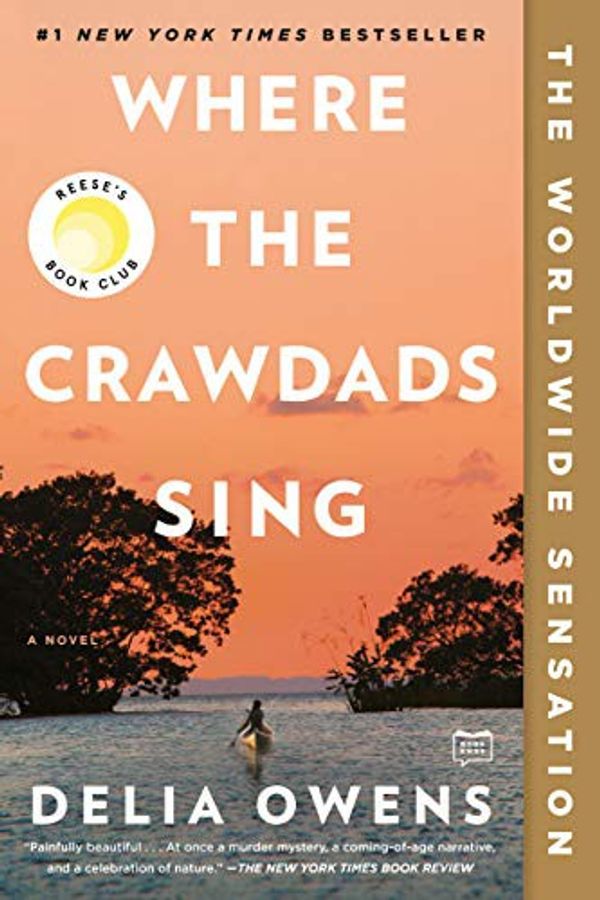
Delia Owens wrote Where the Crawdads Sing about a girl who grows up completely alone in the North Carolina marshes after her family abandons her one by one. Kya Clark teaches herself to read, becomes a self-taught naturalist, and builds a life in isolation that makes Eleanor Oliphant's solitary existence look social by comparison. Both novels are about women whose childhoods left them unable to trust other people. Both use nature as a source of comfort and stability when human relationships fail. And both weave a mystery through the narrative that reframes the protagonist's story.

Owens writes with a lush descriptive style that is nothing like Honeyman's dry wit. The marshland passages are sensory and detailed where Eleanor's Glasgow is presented through her clipped, precise observations. But the emotional core is identical: a woman alone, misunderstood by her community, carrying scars that she has never shown anyone. The romance in Where the Crawdads Sing is more central than in Eleanor Oliphant, and the courtroom thriller element adds genre tension that Honeyman avoids. Readers who loved Eleanor's isolation and wanted to see what that isolation looks like raised to a survival level will find Kya's story answers that question in a completely different landscape.

Elements in common with Eleanor Oliphant is Completely Fine

  • Woman isolated since childhood
  • Nature as solace
  • Community misunderstanding protagonist
  • Mystery woven through character study
The Storied Life of A.J. Fikry by Gabrielle Zevin book cover

The Storied Life of A.J. Fikry

Why it's similar

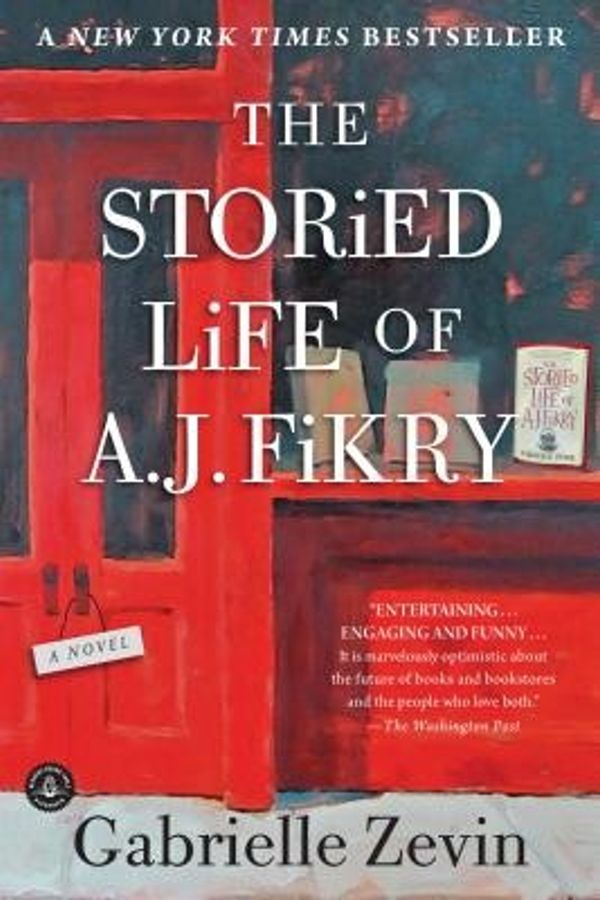
Gabrielle Zevin's The Storied Life of A.J. Fikry is a love letter to books and to the idea that it is never too late to let people in. A.J. Fikry is a grumpy, widowed bookstore owner on a small island. He drinks too much. He alienates his customers. He has built a fortress of literary snobbery and grief around himself. Then a mysterious package appears in his store, and his carefully maintained isolation starts to crumble. The parallel to Eleanor Oliphant runs through the protagonist's voice. A.

J. is opinionated, particular, and blind to his own loneliness the way Eleanor is. He uses books the way Eleanor uses routine: as a buffer between himself and the messiness of real connection. Zevin writes with warmth and literary playfulness, embedding book recommendations throughout the novel in a way that makes it feel like a conversation between reader and character. The tone is sweeter than Honeyman's. There is less darkness in A.J.'s backstory and more gentle comedy in his transformation. But the fundamental promise is the same: watch a prickly, grieving person learn to accept love from unexpected sources. If you loved Eleanor Oliphant for the way it earned its emotional ending through hundreds of pages of dry humor and slowly revealed pain, A.J. Fikry plays the same long game with a bookish twist.

Elements in common with Eleanor Oliphant is Completely Fine

  • Grumpy isolated protagonist
  • Books and routine as emotional armor
  • Unexpected connection breaking through
  • Earned emotional transformation
G

Gail Honeyman

Explore More Books