The Alchemist by Paulo Coelho book cover Featured Selection

7 Books Like The Alchemist

Author Paulo Coelho Year 2014 Genre Literary Fiction Publisher HarperOne

Paulo Coelho wrote The Alchemist as a fable, not a novel. That distinction matters. Santiago is a shepherd boy who dreams of treasure at the Egyptian pyramids and sets out to find it. Along the way he meets an alchemist, falls in love, and learns about the Soul of the World. The book runs under 200 pages and reads more like a parable than a plot-driven story. Every character Santiago meets teaches him something about following your Personal Legend. Some readers find it life-changing. Others find it simplistic. But 150 million copies sold worldwide suggest Coelho tapped into something real about the human desire for meaning. If you read The Alchemist and felt that pull toward books about purpose and self-discovery, finding books like The Alchemist means finding stories that operate as wisdom wrapped in narrative.

Paulo Coelho wrote The Alchemist as a fable, not a novel. That distinction matters. Santiago is a shepherd boy who dreams of treasure at the Egyptian pyramids and sets out to find it. Along the way he meets an alchemist, falls in love, and learns about the Soul of the World. The book runs under 200 pages and reads more like a parable than a plot-driven story. Every character Santiago meets teaches him something about following your Personal Legend. Some readers find it life-changing. Others find it simplistic. But 150 million copies sold worldwide suggest Coelho tapped into something real about the human desire for meaning. If you read The Alchemist and felt that pull toward books about purpose and self-discovery, finding books like The Alchemist means finding stories that operate as wisdom wrapped in narrative.

Books similar to The Alchemist share a commitment to parable over plot. They care less about what happens and more about what it means. They use simple prose to carry large ideas. And they trust readers to extract personal meaning rather than providing a single interpretation. The seven picks below range from ancient spiritual texts to modern novels, but all operate in the same register as Coelho. They are books you read once for the story and return to for the sentences you underlined.

Books Similar To The Alchemist

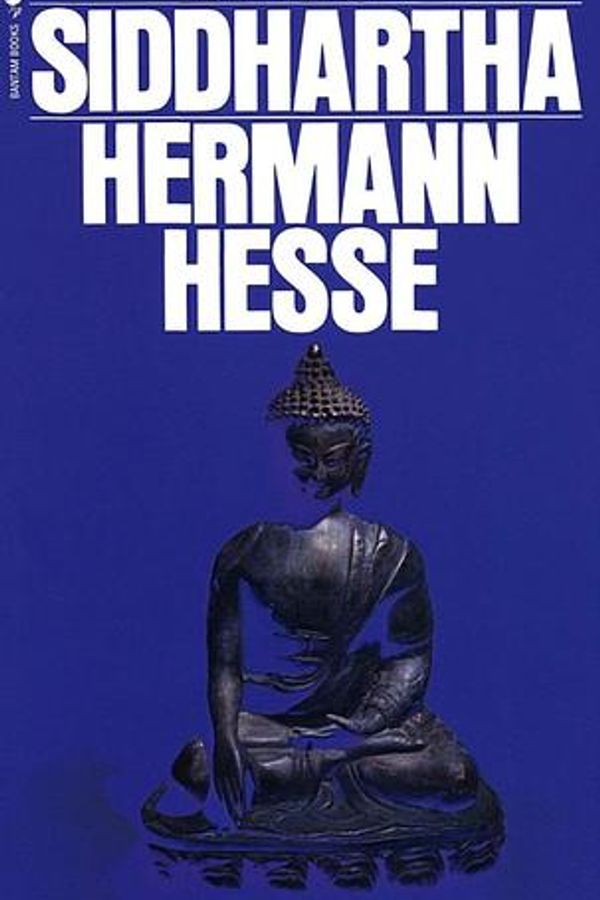
Siddhartha by Hermann Hesse book cover

Siddhartha

Why it's similar

Hermann Hesse wrote Siddhartha in 1922, and it reads like the book Coelho was responding to seventy years later. Both follow a young man who abandons his comfortable life to seek spiritual truth. Both use a stripped-down prose style that lets ideas float above the narrative. And both end with their protagonist finding wisdom not through grand adventure but through stillness and acceptance. Siddhartha leaves his wealthy Brahmin family, meets the Buddha, lives as an ascetic, then swings to the other extreme as a wealthy merchant indulging every pleasure. His spiritual answers come not from any teacher but from listening to a river.

Hesse writes with more literary weight than Coelho. The sentences are denser, the imagery more layered. But the reading experience is similar. You can finish it in an afternoon, and individual passages will stay with you for years. Coelho has cited Hesse as an influence, and the connection is obvious. If The Alchemist spoke to you about the importance of personal quests and listening to the world, Siddhartha asks the same questions with the depth of a writer working at the peak of his craft.

Elements in common with The Alchemist

  • Young man's spiritual quest
  • Simple prose carrying deep ideas
  • Rejection of conventional life
  • Wisdom through experience not teaching
The Prophet by Kahlil Gibran book cover

The Prophet

Why it's similar

Kahlil Gibran published The Prophet in 1923, and it has sold over 100 million copies, making it one of the few books that matches The Alchemist's commercial reach in the inspirational category. Almustafa, a prophet living in exile, is about to board a ship home when the townspeople ask him to share his wisdom on love, marriage, children, work, joy, sorrow, and freedom. Each topic gets its own short chapter of poetic prose. The format is completely different from The Alchemist. There is no plot. No journey. No character development. It is pure distilled philosophy delivered in language that reads like translated scripture.

But the appeal overlaps almost perfectly. Both books function as repositories of quotable wisdom. Both use simple language to address universal human concerns. Both have been pressed into the hands of graduates, travelers, and people at crossroads by friends who say this book changed their lives. Gibran writes with more beauty and less narrative than Coelho. If The Alchemist was your entry point into spiritual literature, The Prophet is the natural second step. You will either find it transformative or baffling, and I think most Alchemist readers will land on the first.

Elements in common with The Alchemist

  • Quotable wisdom literature
  • Simple language for universal themes
  • Global bestseller phenomenon
  • Love and purpose as central subjects
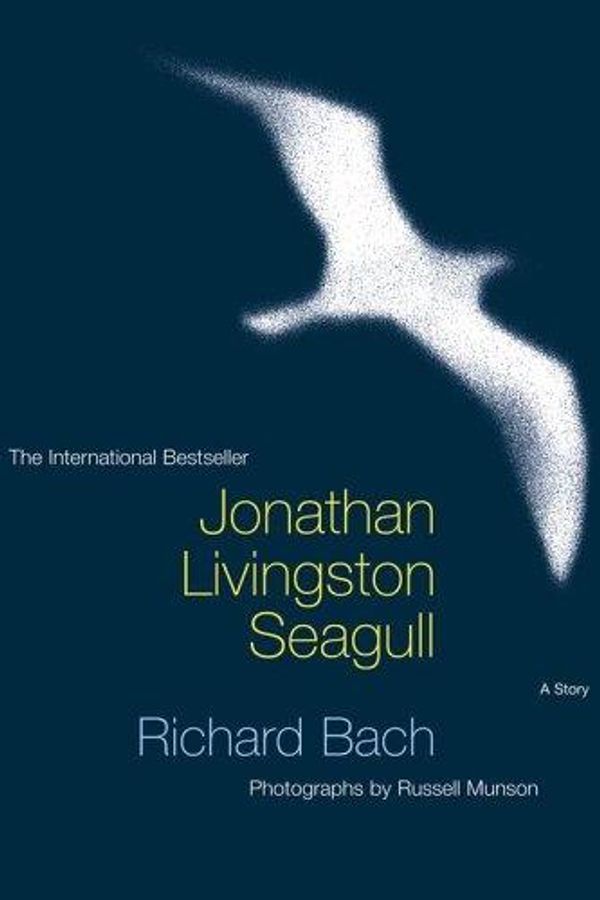
Jonathan Livingston Seagull by Richard Bach book cover

Jonathan Livingston Seagull

Why it's similar

Richard Bach's Jonathan Livingston Seagull is a 10,000-word novella about a seagull who wants to fly faster and higher than any gull has flown before. His flock banishes him for caring about flight as an end in itself rather than as a means to find food. Jonathan practices alone, achieves transcendence, and eventually returns to teach other outcasts what he learned. The parallels to The Alchemist are structural. Both books follow a protagonist who rejects the safe, conventional path his community offers. Both use an extended metaphor to talk about human ambition and spiritual growth. Both are short enough to read in a single sitting but designed to be reread.

Bach writes in a sparse, declarative style that feels even more stripped down than Coelho's. The seagull metaphor either works for you completely or does not work at all. There is no middle ground. Published in 1970, it became the bestselling book in America and helped launch the self-help movement of the 1970s. The Alchemist occupies a similar cultural niche a generation later. If you responded to Coelho's belief that the universe conspires to help those who follow their dreams, Bach was saying the same thing two decades earlier through a bird.

Elements in common with The Alchemist

  • Fable structure with spiritual message
  • Outcast pursuing personal calling
  • Ultra-short inspirational fiction
  • Rejection of conformity
Life of Pi by Yann Martel book cover

Life of Pi

Why it's similar

Yann Martel's Life of Pi operates in the same philosophical space as The Alchemist but wraps it in a much longer, more detailed narrative. Pi Patel survives 227 days on a lifeboat in the Pacific Ocean with a Bengal tiger. The story is told as a frame narrative to a novelist collecting material, and the final pages force the reader to choose between two versions of what happened. Martel uses the survival story to ask questions about faith, storytelling, and whether the meaning we assign to events matters more than the events themselves. That last question connects directly to The Alchemist's central idea that the universe has a language and that your Personal Legend is written in it.

Both books argue that believing in meaning creates meaning. Martel writes with more descriptive power than Coelho. The ocean sequences are vivid and specific in a way that Coelho's desert passages are deliberately not. Life of Pi is a bigger, more ambitious book, but readers who loved The Alchemist for its spiritual underpinning will find Martel playing the same game at a higher level of narrative complexity. It won the Booker Prize and deserved it.

Elements in common with The Alchemist

  • Faith and meaning-making
  • Survival as spiritual test
  • Frame narrative structure
  • Choosing belief over cynicism
The Little Prince by Antoine de Saint-Exupery book cover

The Little Prince

Why it's similar

Antoine de Saint-Exupery wrote The Little Prince in 1943, and it occupies the same shelf in most readers' hearts as The Alchemist. A pilot stranded in the Sahara meets a small prince from a tiny asteroid who tells him about the planets he visited and the rose he left behind. The book is illustrated. It runs under 100 pages. It looks like a children's story. It is not. The Little Prince uses the same fable structure as The Alchemist. Simple events carry symbolic weight.

Characters represent ideas rather than fully realized people. The prose is deceptively plain. Saint-Exupery and Coelho share a conviction that adults lose something important when they stop seeing the world the way children do. The fox's teaching about taming and the rose's lesson about uniqueness function exactly like the alchemist's teachings about the Soul of the World. Both books have been translated into dozens of languages and sell millions of copies per year. They are companion pieces across decades and continents. If The Alchemist is the book that changed how you think about purpose, The Little Prince is the one that will change how you think about love and attention.

Elements in common with The Alchemist

  • Fable with philosophical depth
  • Desert setting
  • Simple prose concealing complexity
  • Global classic on love and purpose
The Kite Runner by Khaled Hosseini book cover

The Kite Runner

Why it's similar

Khaled Hosseini's The Kite Runner takes the themes of The Alchemist and grounds them in specific, painful historical reality. Amir grows up in Kabul, Afghanistan, betrays his best friend Hassan, and spends the rest of his life trying to make it right. Both books are about a man trying to fulfill his destiny. But where Coelho's Santiago faces symbolic obstacles in a parable landscape, Amir faces the Taliban, immigration, and the weight of real guilt. Hosseini writes in first person with a directness that echoes Coelho's clarity but applies it to darker material. The prose is accessible and emotionally transparent.

You always know what Amir feels, and you feel it with him. The connection to The Alchemist is in the book's insistence that redemption is possible, that a person can go back and fix what they broke. Coelho frames that idea mystically. Hosseini frames it realistically. Both arrive at the same conclusion: you have to be brave enough to try. Readers who loved The Alchemist's optimism about human potential but want it tested against real-world suffering will find The Kite Runner a more challenging and ultimately more rewarding version of the same faith.

Elements in common with The Alchemist

  • Redemption through courage
  • Coming-of-age across cultures
  • Accessible first-person prose
  • Destiny and personal responsibility
Brida by Paulo Coelho book cover

Brida

Why it's similar

Paulo Coelho wrote Brida three years after The Alchemist, and it offers the same spiritual philosophy through a completely different character. Brida is a young Irish woman searching for knowledge about magic and her place in the world. She studies with two teachers who represent opposing approaches: a Magus of the Tradition of the Sun (masculine, rational) and a witch of the Tradition of the Moon (feminine, intuitive). The parallel to Santiago's education under the alchemist is direct. Both protagonists learn that spiritual growth requires balancing intellect and intuition.

Coelho writes Brida with the same parable-like simplicity he brings to The Alchemist, but the setting shifts from desert to forest, and the protagonist's challenges are more internal than external. Where Santiago faces thieves and sandstorms, Brida faces jealousy, doubt, and the difficulty of trusting her own vision. The book explores Coelho's ideas about soul mates and past lives with the same earnestness that divides readers of The Alchemist. If you are in the camp that finds Coelho's spiritual sincerity moving rather than naive, Brida gives you more of exactly what you loved, focused on a woman's spiritual awakening rather than a man's.

Elements in common with The Alchemist

  • Spiritual apprenticeship
  • Coelho's parable style
  • Balancing intellect and intuition
  • Personal Legend through different lens
P

Paulo Coelho

Explore More Books