The Hitchhiker's Guide to the Galaxy by Douglas Adams book cover Featured Selection

7 Books Like The Hitchhiker's Guide to the Galaxy

Douglas Adams did something that should not work. He took science fiction, stripped out the seriousness, and replaced it with jokes about bureaucracy, towels, and the number 42. The Hitchhiker's Guide to the Galaxy is absurdist comedy wearing a space opera costume, and it has been making readers laugh since 1979. Arthur Dent wakes up to find his house about to be demolished. Minutes later, the Earth follows suit. From there, the universe gets increasingly ridiculous and somehow increasingly true.

Douglas Adams did something that should not work. He took science fiction, stripped out the seriousness, and replaced it with jokes about bureaucracy, towels, and the number 42. The Hitchhiker's Guide to the Galaxy is absurdist comedy wearing a space opera costume, and it has been making readers laugh since 1979. Arthur Dent wakes up to find his house about to be demolished. Minutes later, the Earth follows suit. From there, the universe gets increasingly ridiculous and somehow increasingly true.

Finding books like The Hitchhiker's Guide to the Galaxy is tricky because Adams occupied a very specific niche. His humor was dry, British, and rooted in a deep frustration with the absurdity of modern life. He used science fiction not to predict the future but to satirize the present. The Guide's footnotes, digressions, and deadpan observations feel closer to Monty Python than to Asimov. Books similar to The Hitchhiker's Guide need to be genuinely funny, not just quirky.

The picks below all understand that comedy and intelligence are not opposites. Some are set in space. Others take place in alternate Earths or on the back of a giant turtle. What they share is wit, a willingness to break narrative rules, and the sense that the author is having as much fun as the reader. I have included a couple of deep cuts alongside the obvious choices, because Adams fans tend to burn through recommendations fast.

Books Similar To The Hitchhiker's Guide to the Galaxy

Good Omens by Neil Gaiman book cover

Good Omens

Why it's similar

Good Omens is what happens when you put two of the funniest writers in speculative fiction in a room together. Neil Gaiman and Terry Pratchett co-wrote this novel about an angel and a demon who have grown comfortable on Earth and would rather not see it destroyed by the Apocalypse, thank you very much. Like Hitchhiker's Guide, it takes a cosmic premise and fills it with deeply human absurdity. The Antichrist gets swapped at birth and ends up in a quiet English village. Everything spirals from there. The humor operates on the same frequency as Adams.

Both books find comedy in the collision between the mundane and the cosmic. Adams had Arthur Dent worrying about tea while the galaxy crumbled. Pratchett and Gaiman have an angel worrying about his book collection while Armageddon approaches. The wit is literate, the satire is sharp, and the affection for humanity is real underneath all the jokes. If you want one book that scratches the Hitchhiker's itch, start here.

The Colour of Magic by Terry Pratchett book cover

The Colour of Magic

Why it's similar

Terry Pratchett's Discworld series is the recommendation Hitchhiker's fans hear most often, and it earns every mention. The Colour of Magic is where it begins: a flat world balanced on four elephants standing on a giant space turtle, with a failed wizard named Rincewind dragged into an adventure he wants no part of. The setup is pure fantasy parody, but Pratchett quickly transcended genre mockery to build something all his own. Pratchett and Adams share a gift for making you laugh at something and then realize it was actually a sharp observation about human nature.

Both write footnotes that are funnier than most authors' best chapters. Both create worlds that run on absurd internal logic and feel completely real. The difference is volume: Pratchett wrote 41 Discworld novels, so once you start you have years of reading ahead of you. For the reader who devoured all five Hitchhiker's books and felt bereft, Discworld is the promise of an endless supply.

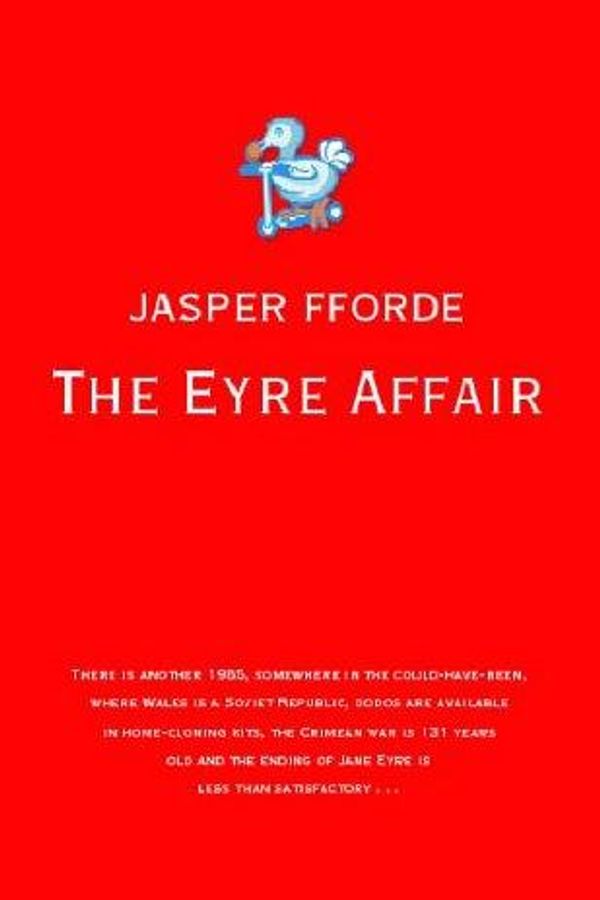
The Eyre Affair by Jasper Fforde book cover

The Eyre Affair

Why it's similar

Jasper Fforde built an entire alternate reality where literature is deadly serious business. In The Eyre Affair, literary detective Thursday Next operates in a 1985 where the Crimean War never ended, time travel is routine, and people can enter books physically. When a villain kidnaps Jane Eyre from the pages of the novel, Thursday has to go in after her. The premise sounds wacky. The execution is surprisingly tight.

What connects Fforde to Adams is the commitment to building elaborate absurd systems and then playing them completely straight. Adams created the Babel fish and the Infinite Improbability Drive with deadpan conviction. Fforde creates a world with literary crime units and dodo cloning programs with the same straight-faced intensity. Both authors reward readers who catch literary references without punishing those who miss them. If you liked how Adams mixed satire with genuine affection for his ridiculous universe, Fforde does the same with a book-lover's twist that makes it feel like a love letter to reading.

Dirk Gently's Holistic Detective Agency by Douglas Adams book cover

Dirk Gently's Holistic Detective Agency

Why it's similar

Adams himself wrote this, and it deserves attention separate from the Hitchhiker's series. Dirk Gently's Holistic Detective Agency follows a private investigator who operates on the principle that everything is connected. A missing cat, an Electric Monk that believes things so you do not have to, a dead professor, and the music of Bach somehow form a single case. The plot makes no sense until suddenly, in the last fifty pages, it makes perfect sense. The humor is vintage Adams but pointed in a different direction. Hitchhiker's satirized the universe at large.

Dirk Gently satirizes England specifically: its universities, its pizza delivery, its stubborn mundanity. The writing is tighter and the plotting more ambitious. Adams called it the book he was most proud of. Readers who loved Hitchhiker's for the voice rather than the sci-fi setting will find the same voice here, applied to a mystery structure that keeps you guessing. I consider it Adams's best work, and many longtime fans agree.

All Systems Red by Martha Wells book cover

All Systems Red

Why it's similar

Martha Wells created one of science fiction's great comic voices with Murderbot, a part-organic, part-mechanical security unit that has hacked its own governor module and mostly just wants to watch TV serials. All Systems Red is the first novella in the series: Murderbot is assigned to protect a group of scientists on a survey mission when things start going wrong. It saves them. It resents having to. The humor here is more character-driven than Adams's cosmic absurdism, but the DNA is similar. Both Arthur Dent and Murderbot are reluctant participants in their own adventures.

Both are deeply annoyed by the situations they find themselves in. Both use dry self-deprecation as their primary coping mechanism. Wells writes action sequences that Adams never attempted, but the social commentary runs parallel. Murderbot's anxiety about social interaction feels like Adams's observations about human awkwardness filtered through a robot shell. Short, fast, and genuinely funny.

Year Zero

Year Zero

Why it's similar

Year Zero has the most Hitchhiker's-like premise on this list. Aliens discover Earth's music, become obsessed with it, and realize that by downloading it without paying they have committed copyright violations so massive they now owe humanity more money than exists in the entire universe. Their solution? Destroy Earth. An entertainment lawyer named Nick Carter is humanity's only hope. Rob Reid is a tech entrepreneur, and the insider jokes about the music industry land with real specificity. The satirical structure mirrors Adams perfectly.

Both authors take one absurd logical premise and follow it to its extreme conclusion with a straight face. Adams asked what happens when the government demolishes your planet for a hyperspace bypass. Reid asks what happens when intellectual property law is applied on a galactic scale. The laughs come from the same place: the gap between cosmic stakes and bureaucratic process. This is a genuine hidden gem that Hitchhiker's fans overlook. It is the closest thing to new Adams in tone and ambition.

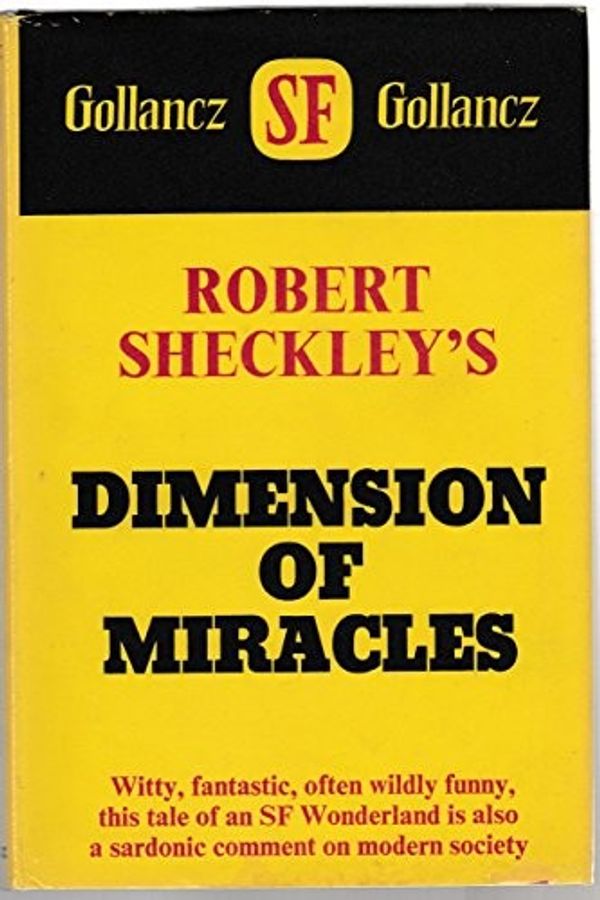
Dimension of Miracles by Robert Sheckley book cover

Dimension of Miracles

Why it's similar

Robert Sheckley published Dimension of Miracles in 1968, a full decade before Hitchhiker's Guide. Adams acknowledged the similarity, and reading it you can see why. Tom Doyle, a regular guy, wins the Intergalactic Lottery and has to find his way home through a universe that keeps shifting underneath him. He is pursued by a predator that has evolved specifically to hunt him. Sound familiar? Sheckley's absurdist sensibility is remarkably close to Adams's.

Both writers treat the universe as an elaborate prank played on ordinary people. Both use science fiction tropes as delivery systems for philosophical comedy. Sheckley's prose is sharper and more surreal, closer to Vonnegut than to the British wit Adams deployed. This is the deepest cut on this list, a book that most Hitchhiker's fans have never heard of despite being a clear ancestor of Adams's work. If you have read everything else on this list and still want more, Sheckley is your answer.

D

Douglas Adams

Explore More Books