The Hunger Games by Suzanne Collins book cover Featured Selection

7 Books Like The Hunger Games

Author Suzanne Collins Year 2009 Genre Dystopian

Suzanne Collins dropped readers into an arena and dared them to look away. The Hunger Games took the survival story, stripped it down to a teenage girl with a bow and a bad hand of cards, and turned it into one of the defining YA novels of a generation. Katniss Everdeen does not want to be a symbol. She wants to keep her sister alive. That tension between personal loyalty and forced heroism is what gives the book its teeth. If you are searching for books like The Hunger Games, you are chasing that same gut-punch: high stakes where losing means death, a system rigged against ordinary people, and a protagonist who fights back not because she is fearless but because she has no other option.

Suzanne Collins dropped readers into an arena and dared them to look away. The Hunger Games took the survival story, stripped it down to a teenage girl with a bow and a bad hand of cards, and turned it into one of the defining YA novels of a generation. Katniss Everdeen does not want to be a symbol. She wants to keep her sister alive. That tension between personal loyalty and forced heroism is what gives the book its teeth. If you are searching for books like The Hunger Games, you are chasing that same gut-punch: high stakes where losing means death, a system rigged against ordinary people, and a protagonist who fights back not because she is fearless but because she has no other option.

The books below all share DNA with Collins's work, but each one brings its own flavor. Some are dystopian. Some are military sci-fi. One predates The Hunger Games by a decade and arguably planted the seed for the entire concept. What connects them is a refusal to soften the cost of survival. These are stories where characters pay real prices for their choices.

We have picked books similar to The Hunger Games that hit different angles of what makes Collins's novel stick: the arena survival, the class warfare, the reluctant rebellion, and the moral weight of violence. Some are quick reads, some are door-stoppers. All of them will keep you up past your bedtime.

Books Similar To The Hunger Games

Battle Royale by Koushun Takami book cover

Battle Royale

Why it's similar

Battle Royale came out in Japan in 1999, a full nine years before The Hunger Games hit shelves. Koushun Takami takes a class of ninth graders, dumps them on an island with random weapons, and forces them to kill each other until one survives. The premise is so close to Collins's arena that readers have argued about the connection for years. But Takami's approach is different in tone. He cycles through dozens of students, giving you just enough backstory on each one to make every death hurt.

The violence is blunter, the government's cruelty more casual, and the pacing is relentless. Where Collins filters everything through Katniss's first-person survival instinct, Takami pulls the camera wide and lets you see the full horror of the system. The book reads like a thriller that never takes its foot off the gas. It is gorier and more explicit than The Hunger Games, so readers who want a PG-13 experience should know what they are signing up for. But if the arena concept is what hooked you about Collins's book, Battle Royale is the original blueprint and still one of the most intense reading experiences in the genre.


Red Rising by Pierce Brown book cover

Red Rising

Why it's similar

Red Rising is what happens when you take The Hunger Games, age it up, and inject it with Roman Empire aesthetics. Darrow, like Katniss, is from the lowest class, forced to compete in a brutal contest designed by the elites. Pierce Brown's Institute on Mars works like a larger, bloodier version of the arena, complete with alliances that form and shatter under pressure. But Brown pushes further into political territory than Collins does in her first book. Darrow is not just surviving; he is a spy planted inside the ruling class, pretending to be one of them while plotting their downfall.

The class warfare is more explicit, and the moral compromises run deeper. Darrow has to become the thing he hates to destroy it, and Brown does not let him off the hook for that. The writing is tight and aggressive, told in present tense with short, punchy sentences that match the book's velocity. I recommend this to Hunger Games readers who aged out of YA and want the same core themes, underdog rebellion against a caste-based tyranny, with adult stakes and consequences. The sequels only raise the scale.

Divergent by Veronica Roth book cover

Divergent

Why it's similar

Divergent wears its Hunger Games influence openly, and that is not a knock against it. Veronica Roth built a future Chicago divided into five factions based on personality traits, and her protagonist Tris has to choose which group she belongs to during an annual ceremony. The choosing and the training that follows carry the same tension as the reaping and the arena. Both Tris and Katniss are stubborn, practical, and allergic to authority. Both get thrown into violent testing grounds where the people in charge care more about control than about kids' lives.

Roth focuses more on identity and belonging than Collins does. The question driving Divergent is not just how do I survive but who am I, and what happens when I do not fit any box? The faction system works as a pressure cooker that forces Tris to define herself through action rather than labels. The training sequences are visceral and physical, with a competitive edge that recalls the Careers and alliances of the arena. If you burned through The Hunger Games wanting more dystopian YA with a fierce female lead, Divergent delivers that exact read.

Ender's Game by Orson Scott Card book cover

Ender's Game

Why it's similar

Ender's Game shares more with The Hunger Games than you might expect from a book about alien warfare. Orson Scott Card puts gifted children into Battle School, where they train in zero-gravity war games that double as psychological experiments run by adults who treat kids as expendable tools. That adult manipulation of children is the same nerve Collins hits when the Capitol sends teenagers into the arena for entertainment. Ender, like Katniss, is brilliant under pressure but carries the psychological scars of being used. Card wrote the book in 1985, and its treatment of child soldiers reads differently now than it did then, darker, more uncomfortable, more relevant.

The Battle Room sequences are tactical and precise, giving readers who loved the strategic side of the Hunger Games arena plenty to chew on. But the real gut-punch is the ending, which reframes everything that came before. Without giving it away, I will say it lands with the same moral weight as Katniss's final arrow. Readers who want a sci-fi take on the weaponization of youth will find Ender's Game uncomfortably resonant.

The Giver by Lois Lowry book cover

The Giver

Why it's similar

The Giver is the quiet, unsettling ancestor of every YA dystopia that followed. Lois Lowry published it in 1993, and its fingerprints are all over The Hunger Games. Jonas lives in a community that has eliminated pain, conflict, and choice. Everything is controlled. Everything is safe. Everything is a lie. When Jonas is assigned the role of Receiver of Memory, he starts learning what his society gave up to achieve its painless existence, and the truth makes it impossible to stay. Collins's Panem is loud and violent where Lowry's community is hushed and orderly, but both worlds run on the same engine: a government that decides what people are allowed to feel, see, and know.

The Giver works through implication rather than spectacle. There is no arena, no blood sport. The horror creeps up on you in small, devastating details. Lowry's prose is clean and deceptively simple, pitched at middle-grade readers but packing enough weight to level adults. I think of The Giver as the other side of the Hunger Games coin. One shows you dystopia through action, the other through silence. Both leave marks.

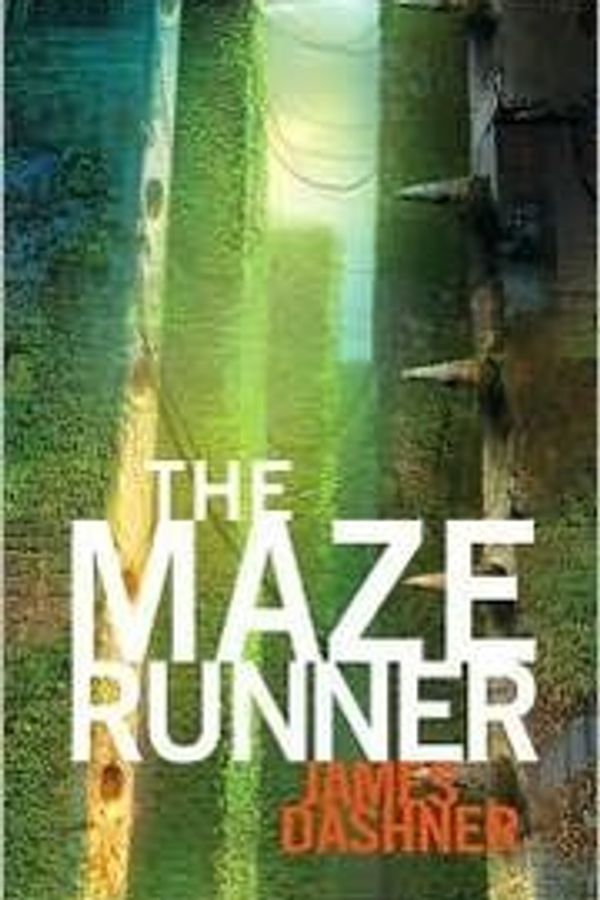
The Maze Runner by James Dashner book cover

The Maze Runner

Why it's similar

The Maze Runner strips The Hunger Games formula down to its bare wiring. James Dashner drops Thomas into the Glade with no memories, no context, and no idea why he is surrounded by other boys trapped at the center of a massive, shifting maze filled with lethal creatures. Like Katniss waking up in the arena, Thomas has to figure out the rules while the clock is ticking. The survival mechanics are front and center: rationing food, mapping escape routes, building alliances with kids who do not trust the newcomer. Dashner writes in short, clipped chapters that pull you forward the way Collins does, always ending on a hook that makes putting the book down feel like a bad idea.

The world-building reveals itself in layers, doling out answers slowly while raising bigger questions. What separates The Maze Runner from a pure action story is the paranoia. Nobody knows who put them there or why, and the possibility that one of the boys might be working against the group adds a psychological tension that mirrors the shifting alliances in the arena. This is my pick for readers who want the survival and mystery elements of The Hunger Games cranked up, with the politics dialed back.

The 100 by Kass Morgan book cover

The 100

Why it's similar

The 100 flips The Hunger Games setup in an interesting way. Instead of a government sending kids to die for sport, Kass Morgan sends one hundred juvenile delinquents from a space colony back to a radioactive Earth to see if humans can survive there again. The kids are still expendable in the eyes of the adults. The adults still hold all the power. But the arena is an entire planet, and the enemy is not other tributes but the Earth itself.

Morgan tells the story through multiple POVs, rotating between characters with different class backgrounds and conflicting agendas on the ground. That structure gives you the same factional tension as the Districts in Panem but from the inside, watching alliances form between people who have every reason to distrust each other. The book moves fast and does not spend long on setup before the first crisis hits. The romance subplots are more prominent than in Collins's work, which will either be a draw or a detour depending on your taste. I suggest it for Hunger Games readers who want the survival-on-hostile-ground concept with more interpersonal drama and a post-apocalyptic setting.

S

Suzanne Collins

Explore More Books