The Night Circus by Erin Morgenstern book cover Featured Selection

7 Books Like The Night Circus

Author Erin Morgenstern Year 2011 Genre Fantasy Publisher Doubleday

Erin Morgenstern's The Night Circus arrived in 2011 and created a reading experience that felt more like stepping inside a perfumed tent than opening a novel. Le Cirque des Reves appears without warning, opens only at night, and vanishes by morning. Inside, two young magicians are locked in a competition they did not choose, building wonders that double as moves in a game with no clear rules. The book smells like caramel and woodsmoke. You finish it and want to live there.

Erin Morgenstern's The Night Circus arrived in 2011 and created a reading experience that felt more like stepping inside a perfumed tent than opening a novel. Le Cirque des Reves appears without warning, opens only at night, and vanishes by morning. Inside, two young magicians are locked in a competition they did not choose, building wonders that double as moves in a game with no clear rules. The book smells like caramel and woodsmoke. You finish it and want to live there.

Finding books like The Night Circus means chasing atmosphere above plot. Morgenstern writes in a style that prioritizes sensory detail, slow reveals, and a dreamlike pace over action or urgency. Books similar to The Night Circus tend to share that quality: they build worlds you can taste, fill them with characters who feel like they exist between reality and myth, and trust readers to follow mood rather than a ticking clock. It is a specific kind of literary fantasy that cares more about wonder than danger.

These seven recommendations all understand what makes The Night Circus special. Some share its historical setting. Some match its treatment of magic as art rather than weapon. All of them will leave you with that same slightly haunted feeling when you close the cover.

Books Similar To The Night Circus

The Starless Sea by Erin Morgenstern book cover

The Starless Sea

Why it's similar

Morgenstern's own second novel is the most obvious follow-up, and it earns the top spot because nobody else writes quite like this. The Starless Sea follows a graduate student who discovers a mysterious book that contains a story from his own childhood. Searching for answers, he finds a hidden underground library that houses a world built from stories, keys, bees, and honey. The atmosphere is thick enough to swim through. Where The Night Circus used a traveling circus as its enchanted setting, The Starless Sea uses a library beneath the earth.

Both books treat physical spaces as characters in their own right, described with the same loving, sensory detail you would use for a person. The romance here runs quieter and stranger than Celia and Marco's, but it carries the same ache. I think readers who loved The Night Circus for its dream logic and its willingness to let mystery remain mysterious will find even more of that here. Morgenstern pushed her own style further, and the result is a book that asks what we owe to the stories that shaped us.

Piranesi by Susanna Clarke book cover

Piranesi

Why it's similar

Susanna Clarke's Piranesi is a small, strange book about a man who lives in a House of infinite halls filled with marble statues and flooded by ocean tides. He maps its rooms, catalogs its wonders, and believes the House to be the entire world. The less you know going in, the better. What connects it to The Night Circus is the sense of existing inside an impossible space that operates by its own beautiful, inexplicable logic. Clarke writes with crystalline precision.

Every sentence is measured and clean, which creates an atmosphere of quiet wonder that Morgenstern achieves through lush accumulation. The two styles differ on the surface but produce the same effect: you forget you are reading and start believing you are somewhere else. I recommend Piranesi for Night Circus readers who want that feeling of enchantment distilled into a shorter, more concentrated form. It is a book you can finish in a single sitting, and it will rearrange something inside your head. The mystery at its center unfolds with patience and grace.

The Golem and the Jinni by Helene Wecker book cover

The Golem and the Jinni

Why it's similar

Helene Wecker's The Golem and the Jinni is set in 1899 New York, the same era The Night Circus inhabits, and shares its ability to make a historical setting feel like a fairy tale. A golem created to be a wife arrives in Manhattan without a master. A jinni is released from an old copper flask in a tinsmith's shop. Two mythological beings from different traditions navigate immigrant life while hiding what they are. The pacing here matches Morgenstern's: unhurried, character-driven, building toward an inevitable collision.

Wecker writes about loneliness and displacement with a tenderness that recalls the melancholy beneath The Night Circus's spectacle. Both books use magic as a metaphor for the longing to be seen and understood. I think this is the strongest pick for readers who loved the historical atmosphere and the bittersweet romance of The Night Circus but want characters with more psychological depth. The golem and the jinni are among the most fully realized non-human characters in modern fiction, and their story stays with you.

Jonathan Strange & Mr Norrell by Susanna Clarke book cover

Jonathan Strange & Mr Norrell

Why it's similar

Susanna Clarke's Jonathan Strange & Mr Norrell is the big, ambitious cousin of The Night Circus. Set in early 19th century England, it imagines what would happen if magic returned to a world that had forgotten it. Mr Norrell is a reclusive scholar who hoards magical knowledge. Jonathan Strange is a daring young magician who wants to bring English magic back into the wild. Their partnership and eventual rivalry drive a plot that spans years and touches the Napoleonic Wars.

Clarke writes in a style that mimics 19th century novelists, complete with footnotes and digressions, which creates a reading experience as immersive as Morgenstern's sensory descriptions. Both authors build their fictional worlds through accumulation of detail rather than exposition. The magic in Jonathan Strange operates with the same mysterious, artistic quality as The Night Circus: it transforms reality in ways that feel like watching a master painter work. This is the recommendation for readers who want a longer, denser version of that atmospheric magic and are willing to commit to a thousand pages.

The Ten Thousand Doors of January by Alix E. Harrow book cover

The Ten Thousand Doors of January

Why it's similar

Alix E. Harrow's The Ten Thousand Doors of January is set in the early 1900s and follows a young woman who discovers that doors between worlds exist, hidden in the margins of our own. January Scaller grows up as the ward of a wealthy collector, surrounded by strange artifacts, never suspecting that her own life is connected to the doors she reads about in a mysterious book. Harrow's prose has been compared to both Morgenstern and Neil Gaiman, and the comparison fits. She writes with a lyrical warmth that wraps around you.

The book shares The Night Circus's interest in the boundary between the magical and the mundane, and its belief that wonder can exist alongside grief. Both novels center a love story that spans impossible distances. I recommend this for Night Circus readers who want the same emotional register but with a protagonist who is more actively searching for answers. January's story moves with more urgency than Celia and Marco's, which gives the book a different kind of momentum while maintaining that same dreamy atmosphere.

Caraval by Stephanie Garber book cover

Caraval

Why it's similar

Stephanie Garber's Caraval is the YA mirror of The Night Circus. A legendary performance arrives on an island, and the audience does not just watch: they participate. Nothing inside is real, except the danger. Scarlett enters Caraval to find her kidnapped sister and discovers that the line between game and reality dissolves the further in she goes. The parallels to Le Cirque des Reves are direct and intentional. Garber writes with a similar devotion to sensory detail: colors, textures, smells, and the feeling of stepping into a space designed to overwhelm your senses.

The stakes are more immediate than in The Night Circus. Scarlett has a ticking clock and a missing sister, which gives the plot a forward drive that Morgenstern deliberately avoids. I recommend Caraval for readers who loved the circus setting and the idea of magic as performance but wanted faster pacing and higher personal stakes. The trilogy expands the world in interesting directions, and each book adds new layers to the game. It reads younger than The Night Circus, but the imagination behind it is just as vivid.

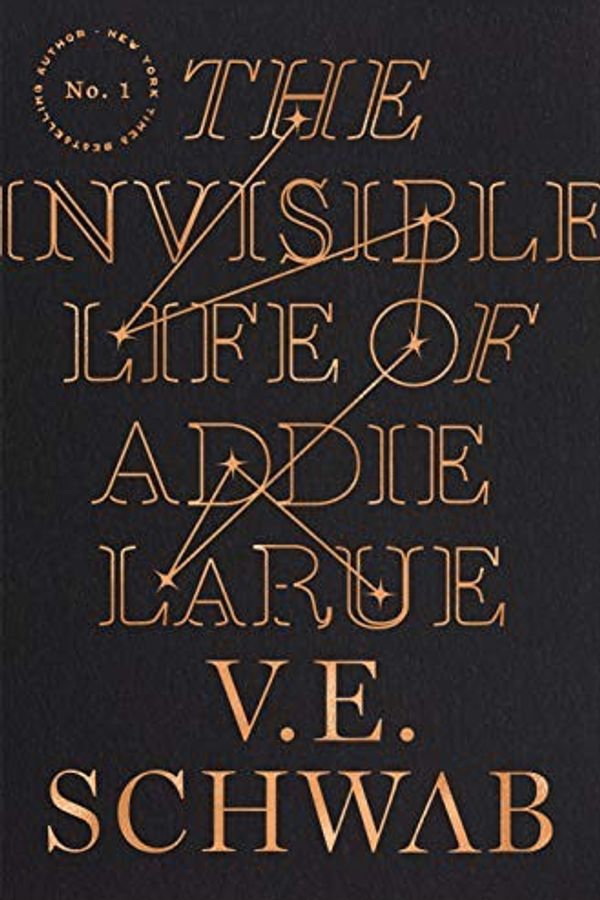
The Invisible Life of Addie LaRue by V.E. Schwab book cover

The Invisible Life of Addie LaRue

Why it's similar

V.E. Schwab's The Invisible Life of Addie LaRue shares The Night Circus's central obsession: what it means to create something beautiful that will not last. Addie makes a bargain with a dark god in 1714 France to live forever, and the price is that no one will remember her. For three hundred years, she drifts through history, leaving no mark, until a young man in a modern bookshop remembers her name.

Schwab writes across centuries the way Morgenstern writes across circus tents: with attention to the small details that make each moment feel specific and lived-in. Both books treat time as something fluid and romantic rather than linear. The love story in Addie LaRue runs on the same bittersweet frequency as Celia and Marco's: two people connected by something larger than themselves, trying to find a way to be together against impossible odds. I recommend this for Night Circus readers who want a story about the cost of immortality and the power of being remembered. It is a book about art, identity, and what survives when everything else fades.

E

Erin Morgenstern

Explore More Books