
Similar To Books
The Lion, the Witch and the Wardrobe by C.S. Lewis book cover Featured Selection

7 Books Like The Lion, the Witch and the Wardrobe

Author C.S. Lewis Year 1950

C.S. Lewis published The Lion, the Witch and the Wardrobe in 1950, and it has been pulling children through wardrobes into Narnia ever since. The Pevensie siblings discover a frozen world ruled by a cruel White Witch, meet the great lion Aslan, and fight in a battle that determines the fate of a land they have only just learned exists. Lewis wrote with clarity and conviction, and his allegory sits lightly enough that you can take it or leave it without losing the story. If you have been searching for books like The Lion, the Witch and the Wardrobe, you are chasing that particular thrill of stepping from the ordinary world into one that feels more real, not less.

C.S. Lewis published The Lion, the Witch and the Wardrobe in 1950, and it has been pulling children through wardrobes into Narnia ever since. The Pevensie siblings discover a frozen world ruled by a cruel White Witch, meet the great lion Aslan, and fight in a battle that determines the fate of a land they have only just learned exists. Lewis wrote with clarity and conviction, and his allegory sits lightly enough that you can take it or leave it without losing the story. If you have been searching for books like The Lion, the Witch and the Wardrobe, you are chasing that particular thrill of stepping from the ordinary world into one that feels more real, not less.

The best books similar to The Lion, the Witch and the Wardrobe deliver a portal to somewhere strange and wonderful, child heroes who rise to meet impossible challenges, and a moral seriousness that never turns preachy. Some of these picks lean into the Christian allegory that Lewis wove through Narnia. Others take the portal-fantasy structure and run in entirely different directions. All of them will make you wish you could find a door in the back of your own closet.

Books Similar To The Lion, the Witch and the Wardrobe

The Hobbit by J.R.R. Tolkien book cover

The Hobbit

Why it's similar

Tolkien and Lewis were friends, colleagues, and sometimes rivals, and The Hobbit is the book Lewis was responding to when he sat down to write Narnia. Both feature reluctant heroes thrust into adventures they did not choose, facing dragons and dark lords in worlds pulled from Northern European myth. Tolkien builds his world with a linguist's precision while Lewis builds his with a preacher's instinct for parable. Bilbo Baggins has the same ordinary-person-in-extraordinary-circumstances appeal as the Pevensie children.

Both authors believe in the reality of good and evil and write villains who are genuinely frightening. Readers who want more of Narnia's sense of a vast, storied world just beyond the edges of the map will find Middle-earth waiting. The Hobbit is the friendlier entry point, written for children with the same directness Lewis used, before Tolkien expanded into the denser Lord of the Rings.

Elements in common with The Lion, the Witch and the Wardrobe

  • Portal from ordinary to magical world
  • Reluctant hero rises to challenge
  • Good versus evil moral framework
  • Northern European mythological roots
Buy on Amazon
Percy Jackson and the Lightning Thief by Rick Riordan book cover

Percy Jackson and the Lightning Thief

Why it's similar

Rick Riordan's Percy Jackson and the Lightning Thief does for Greek mythology what Lewis did for Christian symbolism: weaves it into a modern adventure story that kids actually want to read. Percy discovers he is the son of Poseidon and gets swept into a world of gods, monsters, and quests that runs parallel to everyday America. Like the Pevensies stepping through the wardrobe, Percy crosses a boundary into a hidden reality where everything he learned in school turns out to be wrong. Riordan writes with humor and pace, keeping his mythology accessible without dumbing it down.

Both authors create child heroes who feel genuinely young but are never treated as lesser because of their age. Aslan trusts the Pevensies with a kingdom. Chiron trusts Percy with a lightning bolt. If you want to hand a young reader something that sparks the same imaginative fire Narnia does, this is where I would start.

Elements in common with The Lion, the Witch and the Wardrobe

  • Hidden magical world alongside our own
  • Child heroes given adult responsibilities
  • Mythology made accessible
  • Fast-paced quest structure
Buy on Amazon
Harry Potter and the Philosopher's Stone by J.K. Rowling book cover

Harry Potter and the Philosopher's Stone

Why it's similar

Harry Potter and the Philosopher's Stone follows a neglected boy who discovers he belongs to a magical world. The structural parallel to Narnia is obvious: an unhappy child walks through a barrier and finds a place where they matter. Rowling builds Hogwarts with the same accumulation of sensory detail that Lewis uses for Narnia. You can taste the food, feel the cold stone, hear the portraits chattering.

Both series grow darker as their young heroes grow older, and both treat the battle between good and evil as something worth taking seriously. Lewis and Rowling also share a conviction that love and sacrifice are the most powerful forces in their respective worlds. Aslan's sacrifice on the Stone Table and Lily Potter's sacrifice for Harry run on the same narrative logic. Readers who loved Narnia as children and want to recapture that feeling with a longer, more complex series will find it here.

Elements in common with The Lion, the Witch and the Wardrobe

  • Ordinary child discovers magical world
  • School setting for young magic users
  • Love and sacrifice as ultimate power
  • Series that darkens as heroes mature
Buy on Amazon
Fablehaven by Brandon Mull book cover

Fablehaven

Why it's similar

Brandon Mull's Fablehaven hides a nature preserve for magical creatures behind the facade of a grandparents' country home. When Kendra and Seth discover the truth, they step into a world of fairies, demons, and ancient treaties that echoes Narnia's hidden-world structure. Mull shares Lewis's interest in temptation and moral choice. Seth's recklessness gets him into trouble the way Edmund's greed for Turkish Delight leads him astray. Both authors let their child characters make real mistakes with real consequences.

The worldbuilding is inventive and specific. Each preserve has its own ecosystem of creatures, and the rules governing them create genuine tension. For readers who miss the combination of wonder and danger that Narnia provides, Fablehaven captures that balance well. It is unabashedly middle-grade in the best sense, never apologizing for taking its young audience seriously.

Elements in common with The Lion, the Witch and the Wardrobe

  • Hidden magical world within the ordinary
  • Sibling protagonists
  • Temptation and moral choices
  • Magical creatures with specific rules
A Wizard of Earthsea by Ursula K. Le Guin book cover

A Wizard of Earthsea

Why it's similar

Le Guin's A Wizard of Earthsea was published in 1968 and shares Narnia's mid-century belief that children's fantasy can be literature. Both books are short, direct, and pack enormous emotional weight into compact stories. Where Lewis draws from Christian tradition, Le Guin draws from Taoism and the idea of balance. Ged's struggle with his shadow self mirrors Edmund's seduction by the White Witch: both are stories about confronting the darkness in yourself.

Le Guin's prose is sparer than Lewis's and her world is less allegorical, but the reading experience is similar. You move through Earthsea quickly, and the ideas stay with you for years. Readers who loved Narnia's earnestness and its willingness to treat big themes without embarrassment will find the same quality in Earthsea, pointed in a different philosophical direction.

Elements in common with The Lion, the Witch and the Wardrobe

  • Compact powerful storytelling
  • Young hero confronting inner darkness
  • Mid-century children's fantasy as literature
  • Earnest treatment of big themes
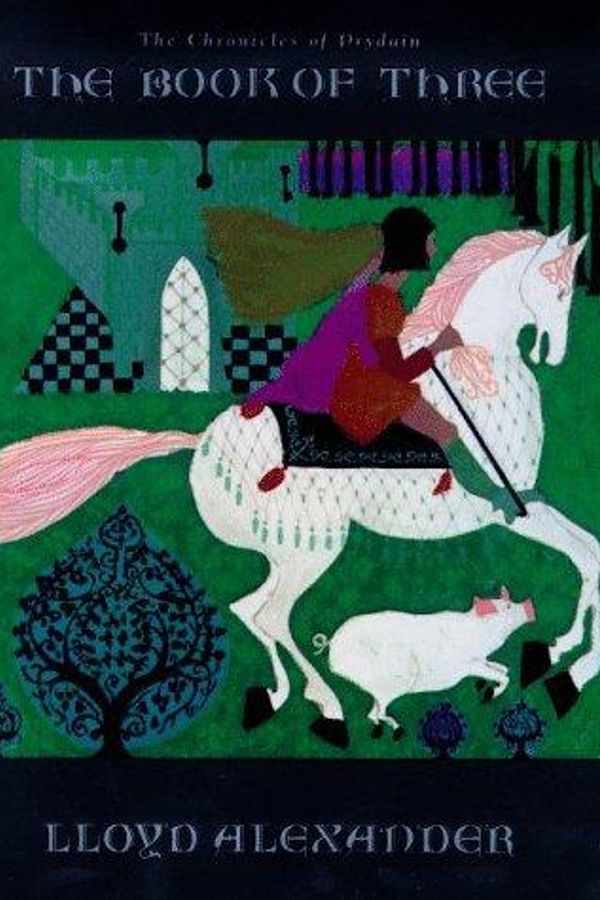
The Book of Three by Lloyd Alexander book cover

The Book of Three

Why it's similar

Lloyd Alexander's The Book of Three is set in Prydain, a land drawn from Welsh mythology, and follows Taran, an Assistant Pig-Keeper who wants to be a hero. Like the Pevensies, Taran is an ordinary young person pulled into a war that will determine the fate of an entire world. Alexander writes with warmth and humor, giving Taran companions who are funny, loyal, and flawed. The series shares Narnia's trajectory from lighthearted adventure to something much more somber by the final volume.

Both Lewis and Alexander respect their young readers enough to include real loss and real sacrifice. Taran grows up across five books the way the Pevensies grow across seven, and by the end, both series have earned their emotional weight. This is the ideal recommendation for readers who want Narnia's quest structure and moral seriousness with a Celtic instead of Christian flavor.

Elements in common with The Lion, the Witch and the Wardrobe

  • Ordinary hero in extraordinary war
  • Welsh and Celtic mythology
  • Series grows darker with each book
  • Real sacrifice and loss
Artemis Fowl by Eoin Colfer book cover

Artemis Fowl

Why it's similar

Eoin Colfer's Artemis Fowl flips the Narnia premise by making the child protagonist the villain. Twelve-year-old criminal mastermind Artemis Fowl discovers that fairies are real and decides to rob them. Colfer builds a hidden fairy civilization beneath the earth that operates with technology and bureaucracy, a funhouse-mirror version of Lewis's enchanted worlds. Where the Pevensies are humble and brave, Artemis is arrogant and calculating, and watching him slowly develop a conscience across the series mirrors Edmund's arc in Narnia.

Both authors hide complex moral development inside fast-paced adventure stories. Colfer writes with an Irish sense of humor that keeps things fun even when the stakes are high. For readers who loved Narnia but want something with sharper edges and a more modern sensibility, Artemis Fowl delivers the same hidden-world excitement from the opposite moral starting point.

Elements in common with The Lion, the Witch and the Wardrobe

  • Hidden magical civilization
  • Child protagonist with moral arc
  • Fast-paced adventure
  • Complex morality in accessible packaging