Harry Potter and the Philosopher's Stone by J.K. Rowling book cover Featured Selection

6 Books Like Harry Potter and the Philosopher's Stone

If you grew up sneaking under the covers with a flashlight to read just one more chapter about Hogwarts, you already know there is nothing quite like the first time you opened Harry Potter and the Philosopher's Stone. That mix of cozy boarding school life, genuine danger lurking in the corridors, and a kid who finds out he belongs somewhere special, it stays with you. So when people search for books like Harry Potter and the Philosopher's Stone, they are really looking for that exact cocktail: warmth, wonder, and a world you can lose yourself in completely.

If you grew up sneaking under the covers with a flashlight to read just one more chapter about Hogwarts, you already know there is nothing quite like the first time you opened Harry Potter and the Philosopher's Stone. That mix of cozy boarding school life, genuine danger lurking in the corridors, and a kid who finds out he belongs somewhere special, it stays with you. So when people search for books like Harry Potter and the Philosopher's Stone, they are really looking for that exact cocktail: warmth, wonder, and a world you can lose yourself in completely.

The good news is that plenty of authors have built magical worlds worth moving into. Some lean into the school-for-gifted-kids formula. Others skip the classroom and drop you straight into ancient forests or enchanted castles. What they all share is that same feeling of discovering a secret layer underneath ordinary life, the sense that magic is just around the corner if you know where to look.

We have pulled together our favorite books similar to Harry Potter and the Philosopher's Stone below. The list mixes classics you have probably heard of with a few picks that deserve way more attention than they get. Whether you want middle-grade fantasy, adult wizardry, or something in between, you will find your next obsession here.

Books Similar To Harry Potter and the Philosopher's Stone

Percy Jackson and the Lightning Thief by Rick Riordan book cover

Percy Jackson and the Lightning Thief

Why it's similar

Rick Riordan wrote Percy Jackson and the Lightning Thief for his son, and that personal warmth bleeds through every page. Like Harry, Percy is a misfit kid who discovers he has powers and gets whisked away to a place where people like him train together. Camp Half-Blood fills the same role Hogwarts does: it is the first place the hero feels at home. Both books treat their young protagonists with real respect, giving them adult-sized problems (absentee parents, prophecies they never asked for) while keeping the tone funny and fast.

Riordan swaps wands for celestial bronze swords and Greek mythology for British folklore, but the engine is the same. A twelve-year-old nobody realizes the myths are real, picks up a loyal best friend and a sharp-tongued ally, and races toward a confrontation with a villain everyone thought was gone for good. If you tore through Philosopher's Stone because you loved the friendship between Harry, Ron, and Hermione, the Percy-Annabeth-Grover trio scratches that identical itch. I hand this one to every kid who tells me they finished Harry Potter and need more.

Buy on Amazon
The Hobbit by J.R.R. Tolkien book cover

The Hobbit

Why it's similar

Rowling has said outright that Tolkien influenced her, and you can feel it in The Hobbit more than anywhere else. Both stories start in a comfortable, domestic setting, Bag End and the cupboard under the stairs, before yanking the protagonist into a world of trolls, dragons, and riddles in the dark. Tolkien and Rowling share a gift for making magic feel tactile and lived-in. You can almost smell the pipe-weed and the Hogwarts feast. The Hobbit's tone sits closer to Philosopher's Stone than The Lord of the Rings does, lighter, more playful, with a narrator who winks at the reader.

Bilbo and Harry are both reluctant heroes, ordinary homebodies who turn out to be braver than anyone expected. Tolkien invented the modern fantasy quest, and Rowling grew up reading it, so the DNA is impossible to miss. If you love the cozy-to-epic arc of Philosopher's Stone, The Hobbit basically wrote the blueprint. Readers who want deep worldbuilding without losing the humor will feel right at home in Middle-earth.

Buy on Amazon
A Wizard of Earthsea by Ursula K. Le Guin book cover

A Wizard of Earthsea

Why it's similar

A Wizard of Earthsea is the original wizarding-school novel, published thirty years before Philosopher's Stone. Le Guin sends young Ged to a school for wizards on the island of Roke, where he studies true names, shapeshifting, and weather magic under demanding teachers. Sound familiar? The parallels run deep, but Le Guin's prose has a spare, mythic quality that reads more like a fable than a romp. Where Rowling gives you candy and fireworks, Le Guin gives you salt air and silence.

That contrast is exactly why I recommend it. Ged's central mistake, letting arrogance unleash a shadow he has to chase across the ocean, hits harder than most villains in children's literature because the monster is his own doing. The theme of confronting the darkness inside yourself threads through Harry's story too, especially as the series darkens in later books. If you want a shorter, denser, more literary take on a young wizard finding his power, Earthsea is the one. It rewards readers who like their fantasy with real weight behind the magic.

The Lion, the Witch and the Wardrobe by C.S. Lewis book cover

The Lion, the Witch and the Wardrobe

Why it's similar

The Lion, the Witch and the Wardrobe practically invented the portal-fantasy formula that Rowling built on. Four ordinary English kids stumble through a wardrobe into Narnia, a frozen world waiting for its rightful rulers, and suddenly they are knee-deep in talking animals, Turkish Delight, and a war between good and evil. The parallels to Harry stepping through Platform Nine and Three-Quarters are hard to miss. Lewis and Rowling both understand that the magic hits hardest when it interrupts a boring, grey, everyday life. The Pevensie children, like Harry, start out powerless and end up carrying the weight of an entire world on their shoulders.

Lewis writes with a brisk, no-nonsense clarity that moves fast and never talks down to kids. The book is short enough to read in an afternoon, which makes it perfect for the reader who is hunting that quick portal-fantasy fix between longer series. Narnia also rewards rereading once you catch the allegorical layers Lewis wove in. I think of it as the grandfather of every wardrobe, train platform, and rabbit hole that came after.

Nevermoor: The Trials of Morrigan Crow by Jessica Townsend book cover

Nevermoor: The Trials of Morrigan Crow

Why it's similar

Nevermoor is the book I press into the hands of anyone who says they want something that feels the way Harry Potter felt the first time. Jessica Townsend clearly grew up on Rowling, and she channels that energy into something that stands entirely on its own. Morrigan Crow is cursed, blamed for every bad thing that happens around her, and destined to die on her eleventh birthday. Then a mysterious patron named Jupiter North rescues her and brings her to the hidden city of Nevermoor, where she competes in trials to join the Wundrous Society. The structural echoes are obvious: outcast child, secret magical society, loyalty tests, a looming dark force.

But Townsend fills her world with such specific, strange details (a sentient hotel, a cat who works as a concierge) that Nevermoor never feels like a copy. The writing is funny, warm, and surprisingly emotional. Morrigan herself is pricklier and more defensive than Harry, which gives the friendship beats real earned weight. This is the pick on this list that most readers have not found yet, and every one of them thanks me later.

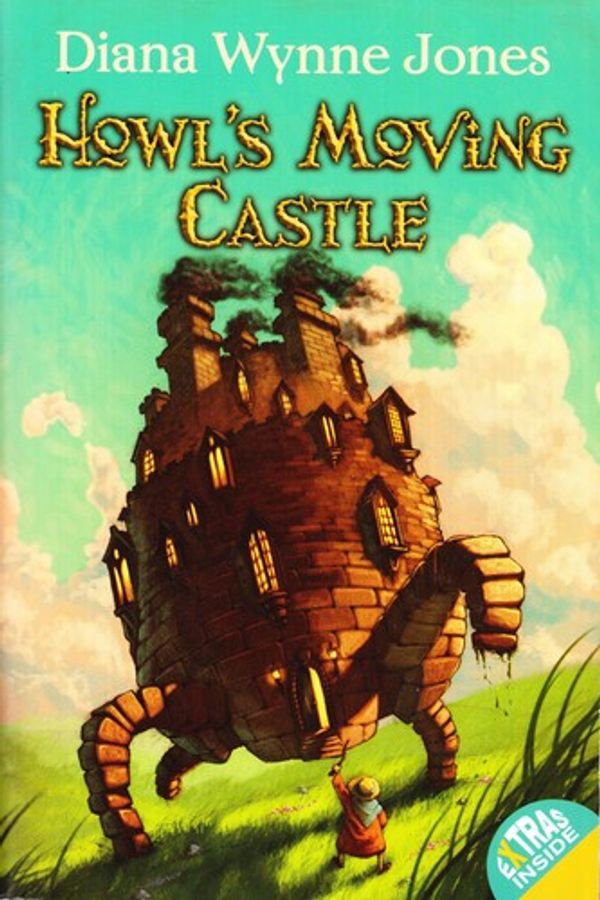
Howl's Moving Castle by Diana Wynne Jones book cover

Howl's Moving Castle

Why it's similar

Diana Wynne Jones was writing witty British fantasy about bickering wizards decades before Rowling, and Howl's Moving Castle is her best. Sophie Hatter gets cursed by a witch and turned into an old woman, then talks her way into the moving castle of the vain, dramatic wizard Howl. The book runs on the same fuel as Philosopher's Stone: a richly imagined magical world, dry British humor, and a heroine who is far tougher than she looks. Jones writes with a light touch that hides real structural cleverness. The plot folds in on itself in ways that reward close readers, much like Rowling's clue-planting across seven books.

Where the two authors really overlap is voice. Both write magic as something messy, domestic, and slightly absurd. Howl's castle is cluttered with dirty dishes and drying spells, just as the Weasley house is held together with enchantments and chaos. Readers who love the lived-in texture of Rowling's wizarding world will find the same quality here, plus a love story that sneaks up on you. Jones deserves credit as one of Rowling's clearest influences.

J

J.K. Rowling

Explore More Books