
Enchiridion
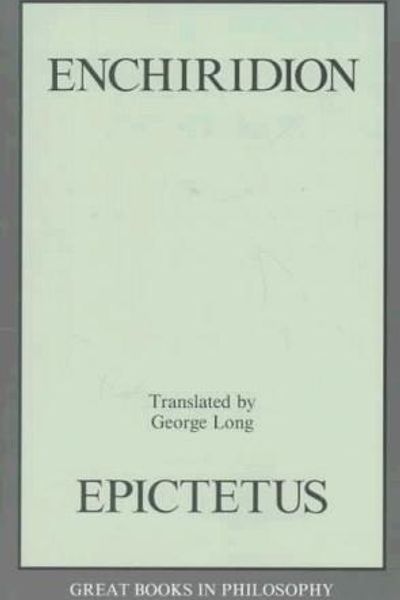
Epictetus was a Roman Stoic who began life as a slave and ended it running one of the most influential philosophy schools in the ancient world. The Enchiridion, compiled around 125 CE by his student Arrian, distills his teaching into roughly 50 short chapters covering desire, judgment, social roles, and the discipline of accepting what cannot be changed. The book opens with the dichotomy of control, the founding move of practical Stoicism, and proceeds through a series of exercises for daily life, from how to handle insults to how to face death. Marcus Aurelius read it. So has every serious Stoic since.
Where Enchiridion keeps showing up
One of our editors' lists features this novel.
Also by Epictetus
What you might want to know about Enchiridion
The questions readers send us most often, answered without spoilers.
The Roman Stoic handbook by Epictetus, compiled by his student Arrian around 125 CE, distilling practical philosophy into 50 short chapters on control, desire, and daily discipline.
The Enchiridion is attributed to Epictetus but was compiled by his student Arrian as a handbook of Epictetus's teachings. It dates to the late 1st or early 2nd century AD.
Yes. The Enchiridion is in the public domain. Free editions of older translations are available legally through Project Gutenberg, Standard Ebooks, and similar archives. Modern translations remain copyrighted.
Enchiridion was written by Epictetus, published in 1600 by CreateSpace Independent Publishing Platform.
Enchiridion is 42 pages in standard print editions, though page counts vary slightly between hardcover, paperback, and large-print formats.
At an average reading pace of about 250 words per minute, Enchiridion takes most readers under an hour to finish.
Enchiridion is a standalone novel by Epictetus, not part of a series.
Enchiridion is available in hardcover, paperback, ebook, and audiobook formats from Amazon, Bookshop.org, ThriftBooks, and most major bookstores.