

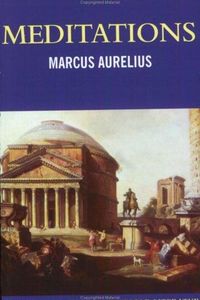




Meditations
Ancient Stoic aphorisms replace modern psychology.
Marcus Aurelius wrote Meditations as a private journal while governing the Roman Empire, and the result reads like Four Thousand Weeks stripped down to its studs. Both books wrestle with the same core tension: you have limited time, the world will not cooperate with your plans, and the only real power you hold is over your own attention and response.
Where Burkeman uses modern psychology to make his case, Aurelius arrives at identical conclusions through Stoic logic and self-examination. The writing style could not be more different, with Meditations offering short, almost aphoristic entries compared to Burkeman's essay-driven chapters, but the underlying message aligns tightly.
Readers who appreciated Burkeman's argument that productivity culture is a defense mechanism against mortality will find Aurelius confronting that same fear directly, two thousand years earlier. This is a book for anyone who wants to sit with impermanence rather than run from it, and it pairs naturally with Four Thousand Weeks as a daily practice companion.