





Thinking, Fast and Slow
The focus turns inward to cognitive machinery rather than social context.
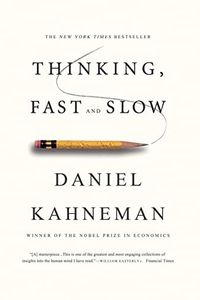
Daniel Kahneman spent decades studying the errors in human reasoning, and Thinking, Fast and Slow is the full account of that work. Where Gladwell examines the external forces that create outlier success, Kahneman examines the internal machinery of the mind that shapes every judgment we make. The book introduces two modes of thinking: System 1, which operates quickly and automatically, and System 2, which handles deliberate analysis.
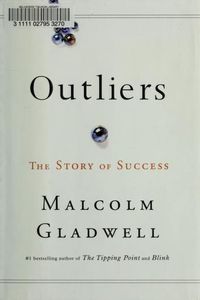
Kahneman shows how overconfidence, anchoring effects, and loss aversion distort choices in predictable ways. The writing is dense compared to Gladwell's but rewards patience. Readers who appreciated how Outliers used the 10,000-hour rule to reframe talent will find a similar thrill in Kahneman's demonstrations of how cognitive biases operate beneath conscious awareness.
Both books take familiar experiences and show the invisible forces at work. If you want to understand not just who succeeds, but how everyone thinks about success and failure, Kahneman provides the deepest available map.