




The Hunger Games
A single focused protagonist replaces four rotating narrators.
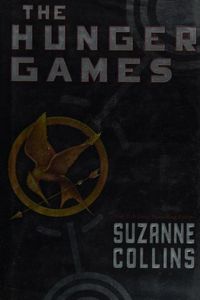
The Hunger Games by Suzanne Collins is the touchstone for every YA dystopia that followed it, and The 100 owes it a significant creative debt. Both novels feature young people forced into deadly situations by a government that treats them as expendable, and both use survival as a lens to examine power, media, and the cost of resistance.
Katniss Everdeen is a sharper, more focused protagonist than any of Morgan's four narrators, and Collins writes action with a brutal efficiency that raised the bar for the entire genre. The political structure of Panem parallels the Colony's rigid class system in The 100, and both stories ask what it takes to break a system that was designed to be unbreakable.
Collins' first-person present-tense narration creates an immediacy that matches Morgan's rotating perspectives. If The 100 introduced you to dystopian YA, The Hunger Games is the reason the genre exists in its current form, and it remains the best entry point for readers who want the same mix of romance, revolution, and raw survival.