

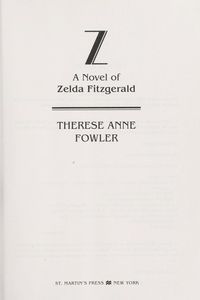




Z: A Novel of Zelda Fitzgerald
Zelda's volatile ambition replaces Hadley's steady self-effacement.
Therese Anne Fowler does for Zelda Fitzgerald what McLain did for Hadley Richardson: pulls her out from behind her famous husband and gives her a voice of her own. Z: A Novel of Zelda Fitzgerald covers the Fitzgeralds' marriage from courtship through crack-up, told entirely from Zelda's perspective. The overlap with The Paris Wife is significant since both couples moved through the same expatriate circles in 1920s Paris, and Fowler includes scenes where Zelda and Hadley interact.
But where Hadley was steady and self-effacing, Zelda was volatile and ambitious, and that difference gives Z a completely different energy. Fowler draws on Zelda's own letters and writings to build a portrait of a woman whose creativity was repeatedly dismissed or stolen by her husband. The Jazz Age parties are here, but so is the asylum, and Fowler does not shy away from the damage Scott inflicted on Zelda's reputation and mental health.
Readers who responded to McLain's empathy for Hadley will find Fowler brings the same care to a woman history has treated far less kindly.