
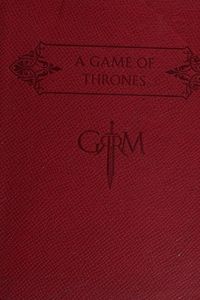






A Game of Thrones
Political cynicism replaces Tolkien's moral clarity.
A Game of Thrones takes Tolkien's split-narrative structure and multiplies it by a factor of eight. George R.R. Martin rotates through viewpoint characters scattered across a continent, and each chapter shift creates the same tension Tolkien generates by cutting between Rohan and Mordor.
Martin's Westeros is built with Tolkien-level depth but operates on different principles: where Middle-earth runs on moral clarity tested by temptation, Westeros runs on political pragmatism tested by idealism. The Stark family's dispersal across the map mirrors the Fellowship's breaking, and the consequences are bloodier. Martin writes battle and court intrigue with equal conviction, giving readers both the siege of King's Landing and the quiet menace of Cersei's plotting. The Wall, where Jon Snow serves the Night's Watch, functions as Martin's Mordor border: a cold, hard place where the real threat gathers while everyone else fights over thrones.
Martin shares Tolkien's love of history, filling Westeros with dynasties, legends, and grudges that shape every present-day decision. For readers who loved The Two Towers' parallel storylines and want that structure taken to its most ambitious extreme, A Game of Thrones is the obvious next read.