

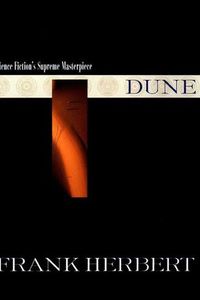




Dune
A single messianic protagonist replaces seven interleaved pilgrims.
Frank Herbert's Dune and Hyperion are the two most frequently compared works of ambitious science fiction, and the comparison runs deep. Both create far futures where humanity has spread across the galaxy and developed complex religious and political systems. Both feature desert planets that hold keys to the future.
Both treat prophecy and prescience as double-edged gifts. Herbert's Muad'Dib and Simmons's Kassad are both warriors caught between destiny and free will. Where Simmons writes in shifting voices and genres, Herbert maintains a single dense style throughout, but both books expect their readers to track multiple plot threads and thematic layers simultaneously.
Dune is more focused on a single protagonist's story, while Hyperion distributes its weight across seven. For readers who loved Hyperion's combination of political intrigue, religious speculation, and military conflict on a galactic scale, Dune is the classic that most closely matches that ambition.