


Their Eyes Were Watching God
Janie claims autonomy where Pecola cannot.
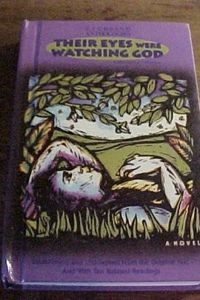
Zora Neale Hurston's novel follows Janie Crawford from her grandmother's porch through three marriages and into self-possession, told in a voice that moves between literary English and Black Southern vernacular with total fluidity. Like The Bluest Eye, the novel centers a Black woman's interior life and treats her desire for autonomy as the story's primary engine.
Both Morrison and Hurston write communities that are simultaneously nurturing and suffocating, where gossip functions as both social glue and weapon. Hurston's Eatonville, like Morrison's Lorain, is a fully realized Black town where the characters' struggles play out among their own people rather than against white antagonists.
The prose in both novels draws on oral tradition, using repetition, rhythm, and dialect to create a music that formal English alone cannot produce. Janie's determination to live on her own terms speaks across decades to Pecola's inability to do the same, making these two novels a powerful pair that shows the range of Black women's experience in American fiction.