




Midnight's Children
Magical realism and satirical exuberance replace Roy's devastating precision.
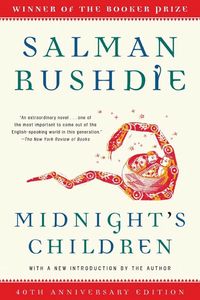
Salman Rushdie's novel follows Saleem Sinai, born at the exact moment of Indian independence, whose life becomes a metaphor for the nation itself. Like Roy, Rushdie writes India with a maximalist energy that refuses to separate the personal from the political, making family dysfunction and national history mirror each other at every turn. Both novels use non-linear timelines to create a sense of fate: the reader knows disaster is coming but cannot look away from the beauty of what precedes it.
Rushdie's magical realism and Roy's heightened lyricism represent different approaches to the same goal of finding a language adequate to India's complexity and contradictions. The caste system, religious tension, and post-colonial identity that haunt Roy's Kerala also run through Rushdie's Bombay, though Rushdie treats them with satirical exuberance where Roy favors devastating precision. Both books insist that India cannot be understood through any single story, that its reality always exceeds the narrative trying to contain it.
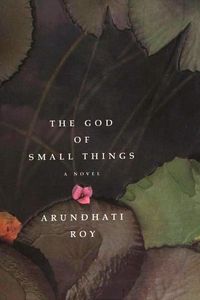
For readers who want books like The God of Small Things that match its ambition and its refusal to simplify Indian experience, Midnight's Children is the essential companion.