






The Wheel of Time
Gendered magic and fourteen volumes replace one trilogy.
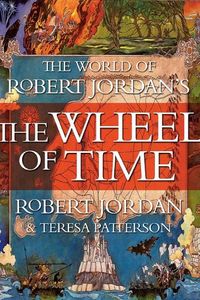
Robert Jordan launched The Wheel of Time in 1990 with The Eye of the World, a novel that begins in a small village where a group of young people are forced to flee dark forces pursuing them. That opening mirrors Tolkien's structure deliberately: Jordan wanted to start readers in familiar territory before pulling them into something much larger. And larger it becomes. Across fourteen volumes, Jordan builds a world with its own magic system, dozens of cultures, and a history that stretches back thousands of years.
The scale matches Tolkien's ambition, though the execution is different. Jordan writes action sequences and political intrigue with a density Tolkien rarely attempted, and his female characters play central roles in ways that Middle-earth's women do not. The magic system, based on gendered halves of a cosmic force, gives the series a structural logic that rewards patient readers. Where Jordan most resembles Tolkien is in his treatment of prophecy and fate.
Both writers create worlds where history repeats in cycles and where chosen ones carry burdens that test them to breaking. If you want the full immersion experience that Tolkien provides but on an even larger canvas, The Wheel of Time is the closest match in modern fantasy.