





The Power of Now
The vocabulary draws more heavily on Buddhism and Christian mysticism.
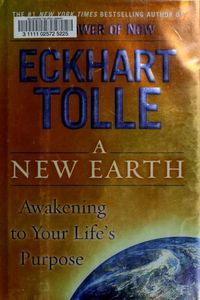
Eckhart Tolle's The Power of Now is the closest parallel to The Untethered Soul in both content and approach. Both books teach that the ego creates suffering through constant identification with thoughts, and both offer the same solution: become the observer of your mind rather than its prisoner. Tolle calls the stream of involuntary thinking the voice in the head. Singer calls it the inner roommate.
The teaching is identical. Where Singer uses a more Western, psychological vocabulary to make his points, Tolle draws from a broader spiritual palette including Buddhism, Hinduism, and Christian mysticism. Both books work as practical manuals for achieving the same shift in consciousness: from thinking to awareness, from reaction to observation, from suffering to presence. Tolle's writing has a distinctive stillness to it that mirrors the quality of presence he describes.
His question-and-answer format makes abstract concepts concrete. For readers who connected with Singer's message about stepping back from the mind and want a second teacher covering the same ground with different language and examples, Tolle provides the most natural companion text.