








House of Leaves
A domestic house, not wilderness, bends physical law.
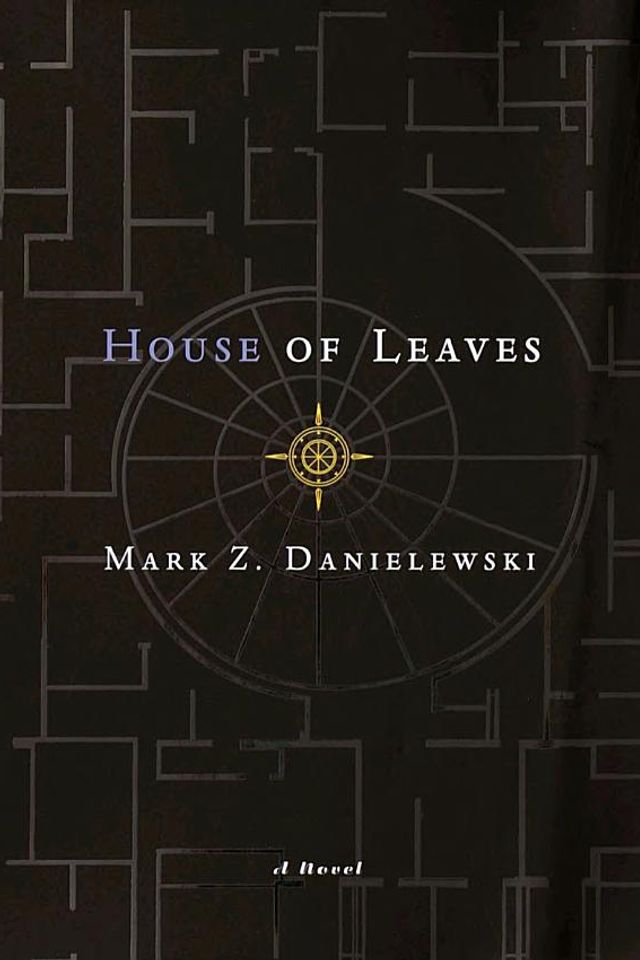
Mark Z. Danielewski's House of Leaves is the most structurally ambitious companion to Annihilation, telling the story of a house that is larger on the inside than the outside through multiple layers of narration, footnotes, and typographic experiments. The novel shares Annihilation's interest in spaces that defy physical law and the psychological disintegration of the people who try to map them.
Where VanderMeer's Area X transforms its explorers biologically, Danielewski's house transforms its inhabitants psychologically, but both environments function as characters in their own right, actively resisting comprehension. The nested narrative structure, with one narrator commenting on another narrator's account of a film about the house, creates the same kind of unreliable, shifting perspective that makes the biologist's journal in Annihilation so disorienting. Both novels use academic or scientific frameworks that gradually break down under the weight of what they are trying to describe, showing the limits of rational inquiry when confronted with the genuinely inexplicable.
The physical layout of the text itself becomes increasingly strange as the house's geometry warps, making the reading experience mirror the characters' disorientation. This is a book that does to domestic space what Annihilation does to wilderness.