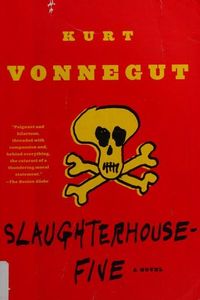



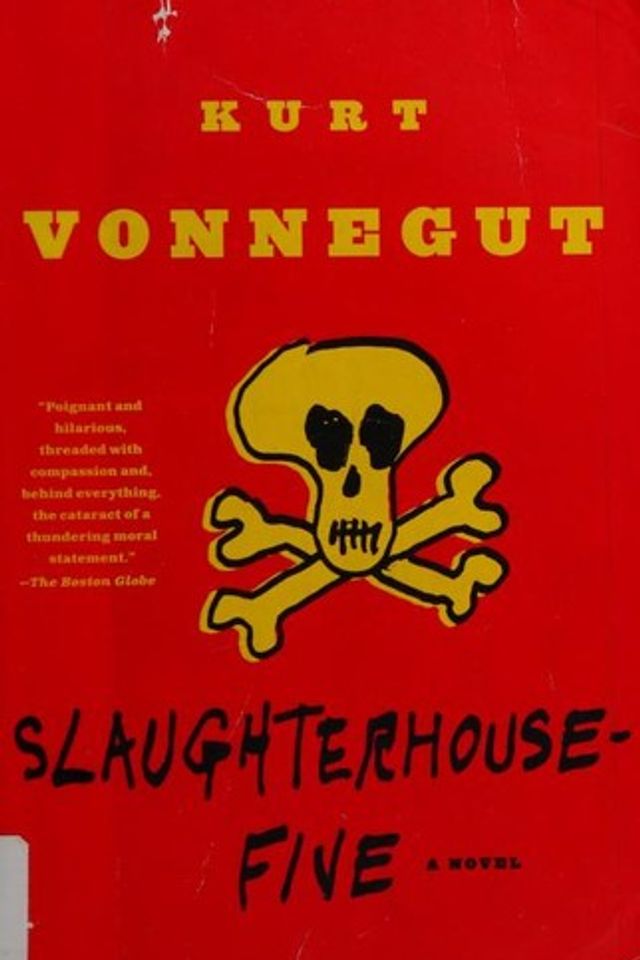
Slaughterhouse-Five
The scaffolding is time travel through one bombing, not apocalypse.
Vonnegut's own Slaughterhouse-Five is the closest match in his catalog, using Billy Pilgrim's time-traveling consciousness to process the firebombing of Dresden in a way that conventional narrative cannot. The novel shares Cat's Cradle's conviction that the biggest human catastrophes resist straightforward storytelling, requiring instead a sideways approach that uses humor, science fiction, and structural fragmentation to get at emotional truths. Billy's passive journey through his own life mirrors the narrator's drift through events in Cat's Cradle, with both characters functioning more as witnesses than as agents.
Vonnegut's trademark refrain after each death serves the same function as Bokononism's cheerful lies in Cat's Cradle: a coping mechanism that acknowledges horror without pretending to make sense of it. The prose is even more pared down than Cat's Cradle's, with sentences that feel almost naive until you realize how much work each one is doing. Both novels are short enough to read in an afternoon but dense enough to think about for years.
If Cat's Cradle was your first Vonnegut, this should be your second.