
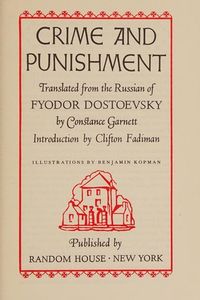







Crime and Punishment
One man's conscience replaces a family's conflicts.
Dostoevsky's Crime and Punishment is the most natural companion to The Brothers Karamazov and the book most readers encounter first. Raskolnikov, a former student living in poverty in St. Petersburg, commits a murder to test his theory that extraordinary people stand above conventional morality.
The novel then follows his psychological disintegration as guilt and paranoia consume him. Crime and Punishment works on a smaller canvas than The Brothers Karamazov, focusing on one man's conscience rather than a whole family's conflicts, but it asks the same questions about whether morality requires God and what happens to a person who tries to live beyond good and evil. Dostoevsky's psychological insight is already fully developed here, and the cat-and-mouse dynamic between Raskolnikov and the detective Porfiry provides a tension that The Brothers Karamazov achieves through different means.
For readers who loved The Brothers Karamazov's examination of guilt, faith, and moral responsibility, Crime and Punishment delivers the same themes in a tighter, more focused form.