





One Hundred Years of Solitude
A generational family saga replaces one Moscow visitation.
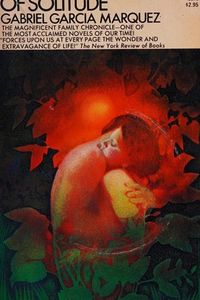
One Hundred Years of Solitude shares The Master and Margarita's ability to hold comedy, tragedy, politics, and the supernatural in a single narrative without letting any one element overpower the others. Garcia Marquez chronicles the Buendia family across seven generations in the fictional town of Macondo, where levitating priests and rains of yellow flowers are woven into the fabric of daily life.
Both novels use magical events to reveal truths about political systems: Bulgakov's Satan exposes Soviet hypocrisy, while Garcia Marquez's miracles illuminate the cycles of power and violence in Latin American history. The tone in both books swings between broad farce and devastating loss, sometimes within the same paragraph.
Both authors also wrote under political pressure and found in magical storytelling a way to say what realist fiction could not. One Hundred Years of Solitude is the closest peer to The Master and Margarita in world literature: a novel that builds an entire cosmology from humor, sorrow, and the stubborn human capacity for wonder.