

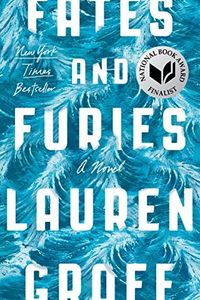




Fates and Furies
Two halves replace four document types.
Lauren Groff's novel tells the story of a marriage from both sides: Lotto sees their union as a great love story fueled by his creative genius, while Mathilde knows the version she has carefully constructed for him to believe. Like Trust, Fates and Furies uses competing narratives to show how power operates inside intimate relationships, and both books reveal that the version of events that survives depends on who has the leverage to tell it.
Groff splits her novel cleanly in half, giving each spouse an entire section, while Diaz distributes his four perspectives across different document types. Both approaches create the same vertiginous effect: the ground shifts under the reader as each new perspective reframes everything that came before.
Groff is more openly emotional than Diaz, and her prose runs hotter, but both novels share a fascination with how stories about wealth and marriage get polished into myths. This is the most structurally similar book on this list.