


search
auto_stories

Start typing to search our library

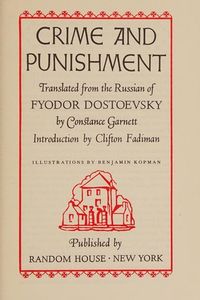
Books like Crime and Punishment

Books that share psychological self-destruction, moral boundary-testing, and first-person guilt with Crime and Punishment.

7
Picks
7 min
Read
May 2026
Updated
1866Published
582Pages
Literary Fiction Genre
The Brothers Karamazov cover
Year 1880 Pages Genre Literary Fiction Match 91%

The Brothers Karamazov

But diverges

Three brothers share the philosophical load across a family saga.

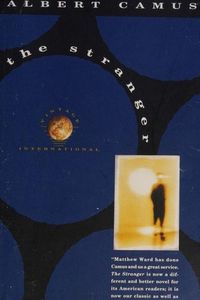
The Stranger cover
Year 1942 Pages 143 Genre Literary Fiction Match 86%

The Stranger

But diverges

Meursault feels nothing where Raskolnikov is consumed by guilt.

Notes from Underground cover
Year Pages Genre Non-Fiction Match 88%

Notes from Underground

But diverges

The monologue has no murder, just a ranting basement-dweller.

The Picture of Dorian Gray cover
Year 1890 Pages 59 Genre Literary Fiction Match 80%

The Picture of Dorian Gray

But diverges

The supernatural portrait absorbs the moral consequences.

Anna Karenina cover
Year 1878 Pages 668 Genre Literary Fiction Match 82%

Anna Karenina

But diverges

The destruction grows from adultery rather than murder.

The Trial cover
Year 1825 Pages 269 Genre Literary Fiction Match 84%

The Trial

But diverges

The accused has committed no crime he can identify.

The Count of Monte Cristo cover
Year 1844 Pages 72 Genre Literary Fiction Match 78%

The Count of Monte Cristo

But diverges

The engine is plotted revenge rather than inward guilt.

Why are these books similar to Crime and Punishment?

These recommendations reflect the different ways Dostoevsky's Crime and Punishment continues to shape how we think about guilt, justice, and the limits of human rationality. The novel's central question, whether an extraordinary person can stand above moral law, has generated responses across centuries and languages. Each pick above takes that question in a direction Dostoevsky himself would have recognized.

The list includes Dostoevsky's own final novel, where three brothers each answer the question of God and morality differently, an existentialist inversion where a man barely has a conscience at all, and a panoramic portrait of self-destruction driven by passion and social constraint. Together, they form a reading path through the literary tradition that Raskolnikov helped create.

This list is for readers who finished Crime and Punishment feeling that Dostoevsky had articulated something true about the human capacity for self-deception. If you want more fiction that treats moral psychology as the most interesting subject in the world, these books like Crime and Punishment will not disappoint.

F

Fyodor Dostoevsky

Explore more books →