

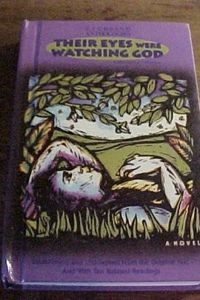




Their Eyes Were Watching God
Early Florida replaces Depression-era rural Georgia.
Zora Neale Hurston's Their Eyes Were Watching God follows Janie Crawford through three marriages in early twentieth-century Florida, tracing her growth from a girl whose grandmother marries her off for security into a woman who knows what love and selfhood actually feel like. Like Celie, Janie starts her story under the control of men who define her value by her usefulness, and like Celie, she finds her voice through the experience of real love.
Hurston writes in the Black Southern dialect of her time, the same way Walker writes in Celie's vernacular, and both authors treat that language as literature rather than something to be corrected. Both novels are about Black women who survive by enduring and then thrive by choosing.
Hurston published in 1937, decades before Walker, and Walker has cited Hurston as a direct influence on The Color Purple. For readers who loved the way Celie's voice strengthens across her letters, Janie's voice across her three marriages creates the same arc of transformation from silence to speech.