





The Hitchhiker's Guide to the Galaxy
Absurdist sci-fi replaces theological satire.
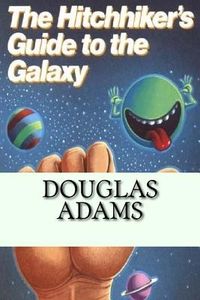
Douglas Adams' The Hitchhiker's Guide to the Galaxy is the closest relative Good Omens has in terms of tone and ambition. Both books take an event of total destruction and turn it into a comedy of errors, and both trust their readers to laugh at the universe without dismissing it. Adams writes Earth's demolition with the same cheerful fatalism Pratchett and Gaiman bring to the Apocalypse.
Arthur Dent and Aziraphale share a quality of bewildered decency, characters who want nothing more than comfort and normalcy while the cosmos insists on spectacle. Adams' humor is more absurdist and less warm than the Good Omens blend, but the underlying affection for flawed, ordinary beings surrounded by incomprehensible systems is identical. Both books build joke structures that also function as philosophical arguments, and both use science fiction or fantasy premises mainly as platforms for observing human nature.
Hitchhiker's Guide invented the template that Good Omens later refined with added emotional depth.